Copper
October 7, 2024
2 min
Copper


This graphic illustrates the copper production costs across various mines and companies worldwide in 2023. Global costs varied significantly, with regions like Kazakhstan, Peru, Mexico, and the Democratic Republic of the Congo (DRC) emerging as particularly cost-efficient. Production costs per pound ranged from as low as $0.95 at KAZ Minerals’ Bozshakol mine in Kazakhstan to over $2.00 per pound at operations run by companies like BHP and Lundin Mining. These differences highlight the influence of regional factors such as resource accessibility, infrastructure, and labor on mining expenses.
KAZ Minerals, predominantly operating in Kazakhstan, stands out as a leader in low-cost copper production at its Bozshakol and Aktogay open-pit mines. Kazakhstan provides significant cost advantages in mining with diesel at US$0.50 per liter, and electricity at just 2.5 US cents per kWh. Additionally, the country has a skilled workforce, enhancing efficiency while keeping labor costs competitive. Despite the higher labor intensity at its older East Region mines, KAZ Minerals offsets these costs with by-product revenues from zinc, lead, and silver, further enhancing its cost efficiency.
Southern Copper Corporation operates major mines in Mexico and Peru, achieving one of the lowest production costs globally at $1.03 per pound. Their large-scale open-pit mines, like Buenavista del Cobre and La Caridad in Mexico, and Toquepala and Cuajone in Peru, benefit from significant economies of scale and by-product sales, ensuring low costs and high output.
Chile’s Escondida mine, operated by BHP, remains one of the world’s most important copper assets. Despite rising costs, including $1.40 per pound in 2023, Escondida continues to optimize operations, improving feed grades and production efficiency. Chile’s robust mining infrastructure and skilled workforce help keep it competitive, despite inflationary pressures.
The DRC continues to benefit from low-cost production at the high-grade Kamoa-Kakula mine. This project, operated by Ivanhoe Mines, produces copper at some of the world’s lowest costs, thanks to rich ore deposits and efficient operations.
While key regions maintain competitive production costs, the global copper industry saw rising expenses in 2023 due to inflation, energy price hikes, and labor shortages. However, companies are mitigating these pressures through technological improvements, by-product revenues, and increased efficiency.
Sponsored by:

Arras Minerals is a mining exploration company focused on copper and gold projects in northeast Kazakhstan, with key assets including Elemes, Tay, and Beskauga. The company also partners with Teck Resources on a 1,900 sq km exploration area funded by Teck. Arras aims to expand exploration in Kazakhstan's prolific mineral belts, leveraging untapped potential through drilling and geological surveys to define resources and grow its portfolio.
Learn more about Arras Minerals at https://www.arrasminerals.com/
The information presented here may contain inaccuracies and is subject to rounding. We do not guarantee that all information is complete or correct. We accept no responsibility for any errors, omissions, or outcomes resulting from the use of this information. This is not investment advice.





Explore More
View All

Ranked: The World's Largest Copper Mines (2025)
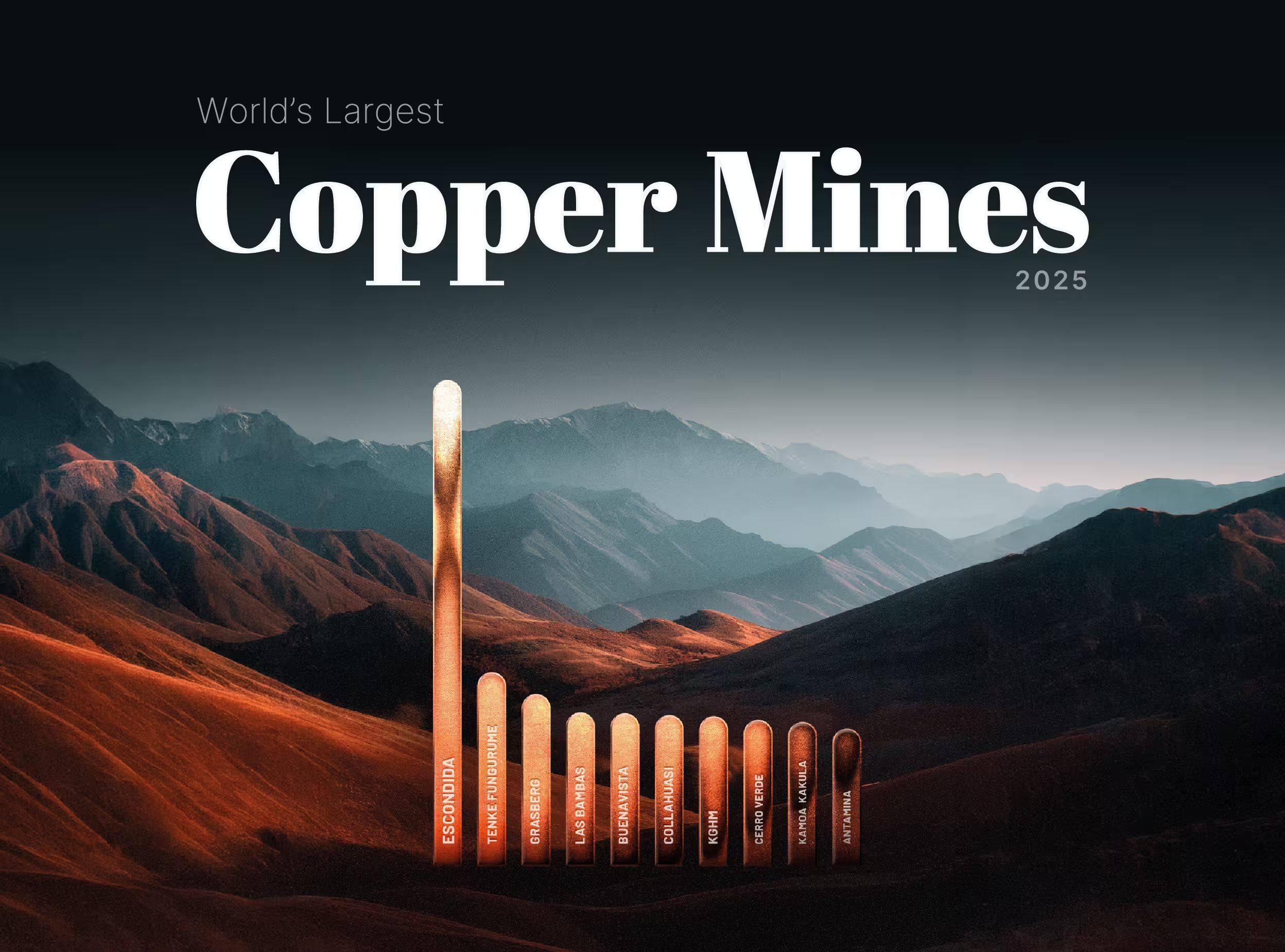
Ranked: The World's Largest Copper Mines (2025)
Copper has spent 2026 setting records, touching an intraday COMEX high of $6.71 per pound on May 13 amid AI-driven demand and supply shocks, against a backdrop where the ICSG now forecasts a 150,000-tonne deficit for 2026. In a market this tight, where the deficit thesis turns on lost tonnes, the question of where the world's copper actually comes from carries unusual weight.
Copper on Track for Its Highest Monthly Close on Record: A Look at the Drivers
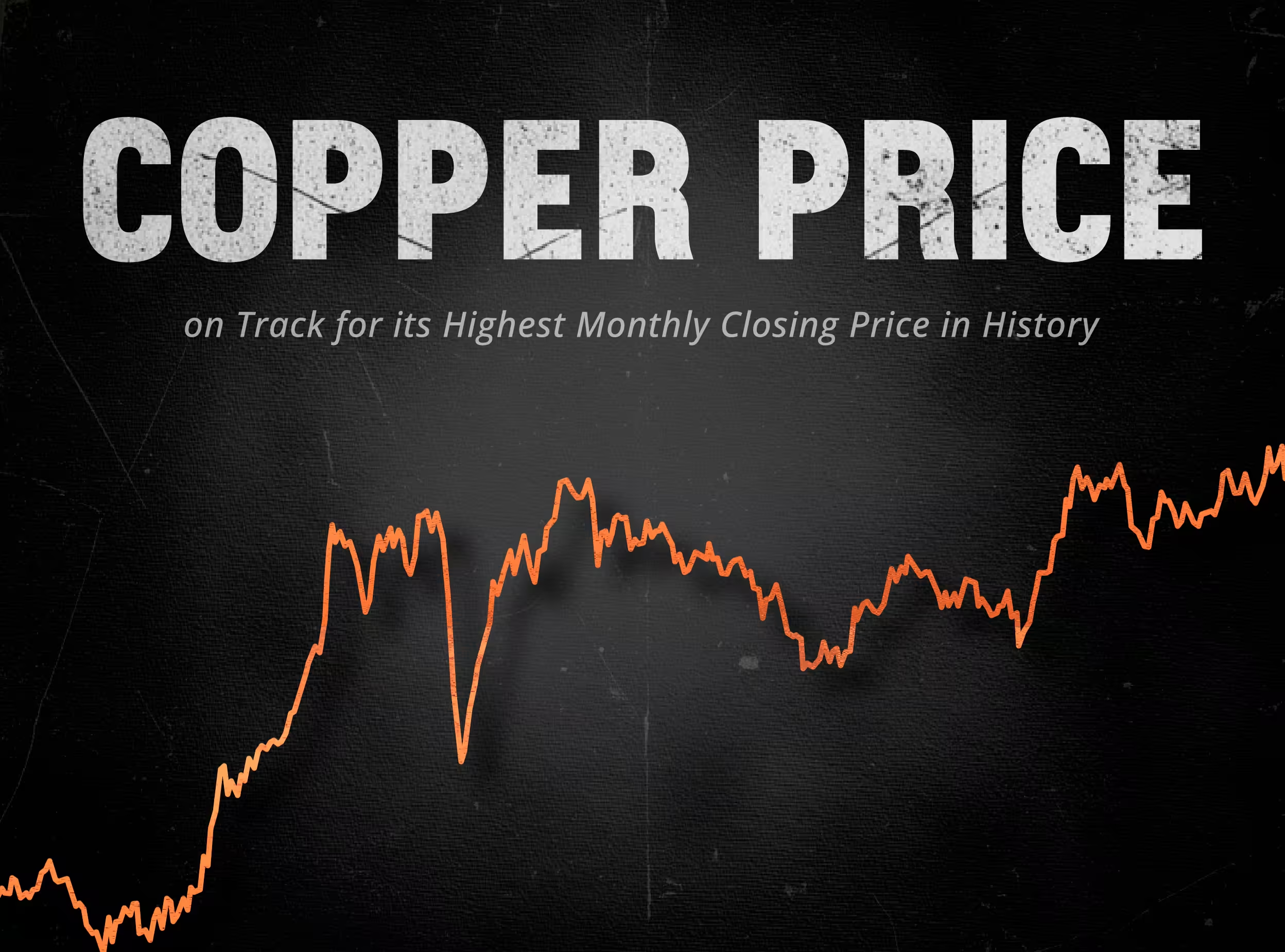
Copper on Track for Its Highest Monthly Close on Record: A Look at the Drivers
Copper has spent most of 2026 doing something it had not done in a quarter century: setting fresh records every few weeks. The COMEX contract printed an intraday all-time high of $6.71 per pound on May 13, and the May monthly close looks set to land at the top of the historical chart. In London, copper traded above $14,000 per tonne in mid-May, touching $14,196.50, within reach of the LME's January 29 record of $14,527.50.

The Cost of Mining Copper: A 2024–2025 Update
The Cost of Mining Copper: A 2024–2025 Update
Copper futures touched an all-time high above $6.58 per pound on May 12, 2026, capping a 40.86% gain over the prior twelve months as supply tightness collided with structural demand from grid build-out, electric vehicles, and AI data centers. Earlier in the year, the LME benchmark rallied 22% to a record $13,387 per tonne on January 6, 2026. Behind the price action lies a less-discussed story: what it actually costs the world's largest miners to pull a pound of copper out of the ground.
Copper Production Q4 2025
Copper Production Q4 2025
As power-hungry AI data centers drive a projected 2-million-ton surge in global copper demand by 2030, market attention remains fixated on the supply side. Fourth-quarter 2025 metrics provide a definitive look at how the world's top miners closed out the year. While overall volumes remain heavily concentrated among a few historic industry giants, the true Q4 narratives emerged further down the list, as mid-tier producers leveraged flagship asset expansions to hit multi-year highs and offset the sector's ongoing struggle with declining ore grades.