Geology
April 8, 2025
1 min
Geology
.avif)

The following content is sponsored by Pakistan Minerals Investment Forum 2025
As one of Earth's most significant metallogenic belts, the Tethyan Belt carves a vast path across the globe, stretching thousands of kilometers from Europe, through the Middle East and the Himalayas, and extending into Southeast Asia. This immense geological feature is the complex legacy of the closure of the ancient Tethys Ocean and the subsequent continental collisions that shaped large parts of Eurasia. The belt hosts world-class endowments of diverse mineral deposits, making it a globally vital source of base metals, precious metals like gold, and increasingly important critical minerals.
Copper and Gold Giants:
The Tethyan Belt is arguably most renowned for its tremendous wealth in copper and gold. These metals are often found together in large-scale porphyry deposits and associated epithermal systems, which remain primary targets for mineral exploration efforts throughout the region. Significant examples illustrating the scale of mineralization include:
- Significant Copper Deposits (>5 Million Tonnes): Such as Skouries (Greece), Majdanpek & Bor (Serbia), Kışladağ (Turkey), Sar Cheshmeh (Iran), and Sungun (Iran).
- Significant Gold Deposits (>5 Million Ounces): Including Roșia Montană (Romania) and Çöpler (Turkey).
- Major Copper-Gold Systems: Reko Diq in Pakistan stands out as a particularly massive mineralized zone within the belt. Other notable sites include Hot Maden (Turkey) and the historical mining district of Banská Štiavnica (Slovakia).
A Diverse Mineral Inventory:
Beyond the headline copper and gold resources, the Tethyan Belt's complex geology has generated a wide array of other valuable mineral deposits:
- Lead, Zinc, and Silver: These metals are also very common throughout the belt, often occurring in epithermal vein and replacement-type deposits, sometimes found alongside copper and gold systems.
- Chromium: Significant chromium deposits are associated with ophiolite sequences – remnants of ancient oceanic crust emplaced during tectonic collisions. These are particularly important in countries like Turkey.
- Other Notable Minerals: The belt is a major source of other industrial and critical minerals. Turkey, for instance, holds a majority of the world's Boron resources. Deposits of Bauxite (aluminum ore), Phosphate, Potash, Manganese, Antimony, and Uranium are also found within this vast geological province.
Future Potential and Exploration:
Despite centuries of mining activity, the Tethyan Belt remains a prime target for continued mineral exploration. Its geological potential is far from exhausted, particularly concerning the discovery of new deposits vital for modern technology and the energy transition.
Regions such as Eastern Europe, Pakistan, and parts of Turkey are noted as being under-explored with high potential for future discoveries. Events like the Pakistan Minerals Investment Forum 2025 underscore the ongoing efforts and significant interest in unlocking the remaining mineral wealth within specific, highly prospective parts of the belt, like Pakistan. The continued exploration focus ensures the Tethyan Belt will remain a crucial contributor to the global supply of essential metals and minerals for the foreseeable future.
Sponsored by:

The Pakistan Minerals Investment Forum 2025 (PMIF25) is the country’s premier platform dedicated to unlocking Pakistan’s vast mineral potential. Held at the Jinnah Convention Centre in Islamabad on April 8-9, 2025, this high-profile gathering will bring together industry leaders, investors, and policymakers to explore Pakistan’s growing role in the global supply of critical minerals. As the demand for essential minerals surges worldwide, Pakistan is positioning itself as a key player in future-facing supply chains. PMIF25 offers a unique opportunity to connect with stakeholders, discover new investment avenues, and be part of the country’s mining transformation.
Join us at PMIF25 and be at the forefront of Pakistan’s next mineral boom.
For more information: https://www.pakminforum.com/




Explore More
View All

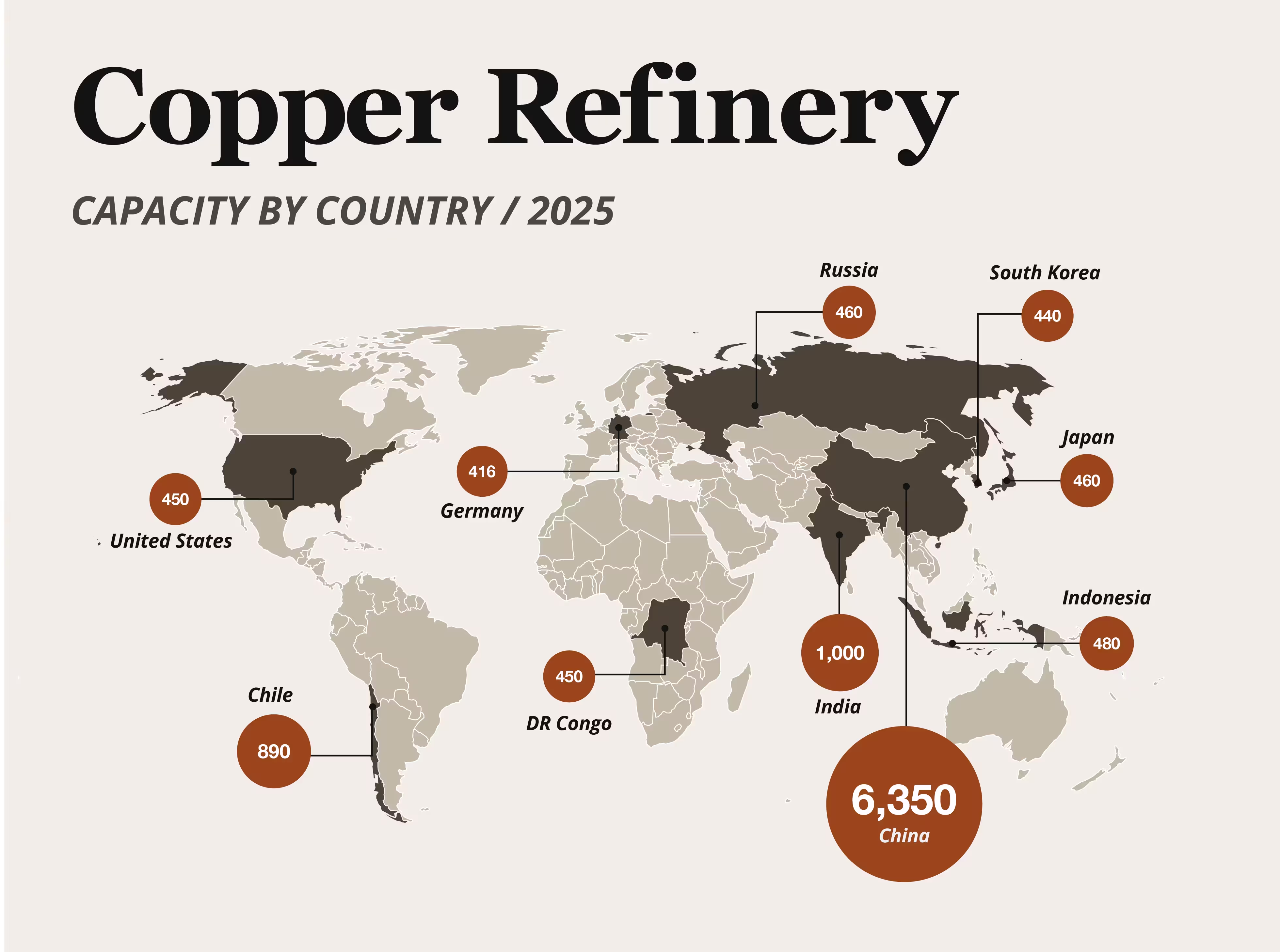
China Holds 56% of the Capacity at the World's 21 Largest Copper Refineries
China Holds 56% of the Capacity at the World's 21 Largest Copper Refineries
Indonesia's circle on the map above stands for a single plant: the Manyar refinery in East Java, operated by PT Freeport Indonesia, with 480,000 tonnes a year of capacity, according to the International Copper Study Group. It has been shut since the fourth quarter of 2025, after a mudflow at the Grasberg mine cut off its concentrate supply, and is due to restart this month at below 30% of capacity.
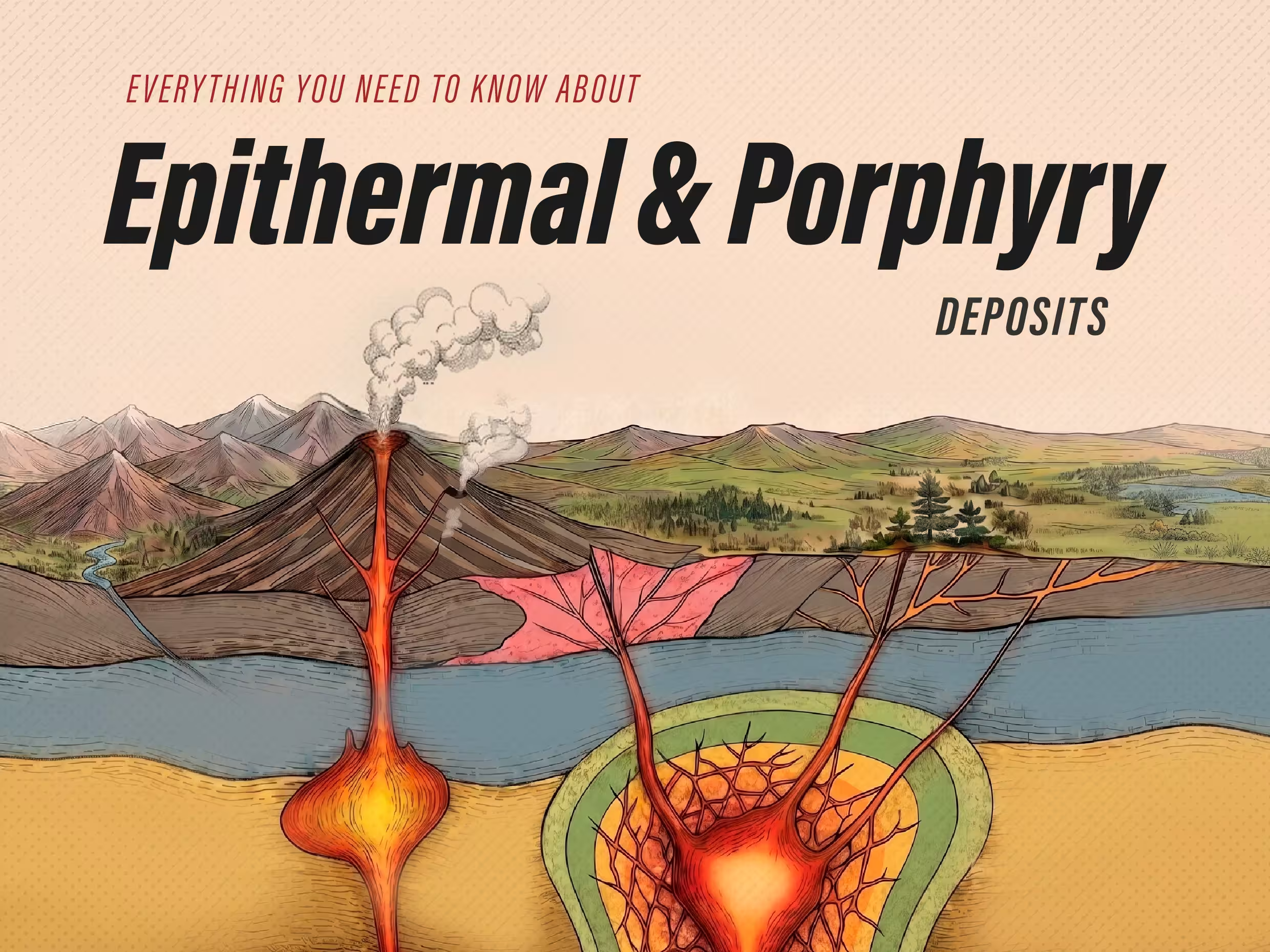
Inside Porphyry and Epithermal Deposits: The Geology of Earth's Most Productive Mines
Inside Porphyry and Epithermal Deposits: The Geology of Earth's Most Productive Mines
In March 2025, the USGS published an updated global database cataloguing every known porphyry copper deposit on Earth, a remarkable cartographic exercise for a deposit type that already supplies the planet with about 60% of its copper. What the database does not show is that the same magmatic engine produces a second, very different ore type immediately above: epithermal gold-silver veins
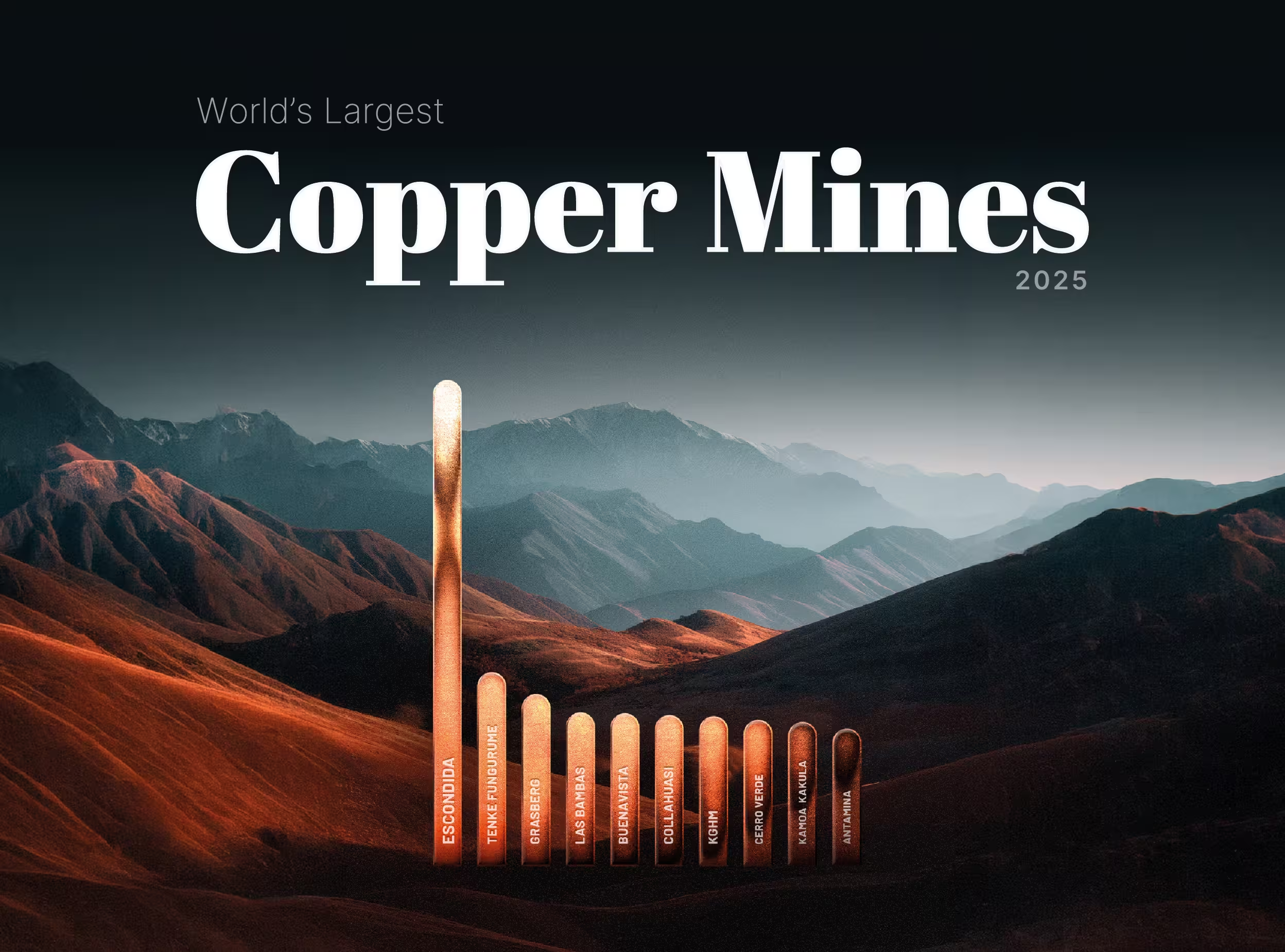
Ranked: The World's Largest Copper Mines (2025)
Ranked: The World's Largest Copper Mines (2025)
Copper has spent 2026 setting records, touching an intraday COMEX high of $6.71 per pound on May 13 amid AI-driven demand and supply shocks, against a backdrop where the ICSG now forecasts a 150,000-tonne deficit for 2026. In a market this tight, where the deficit thesis turns on lost tonnes, the question of where the world's copper actually comes from carries unusual weight.
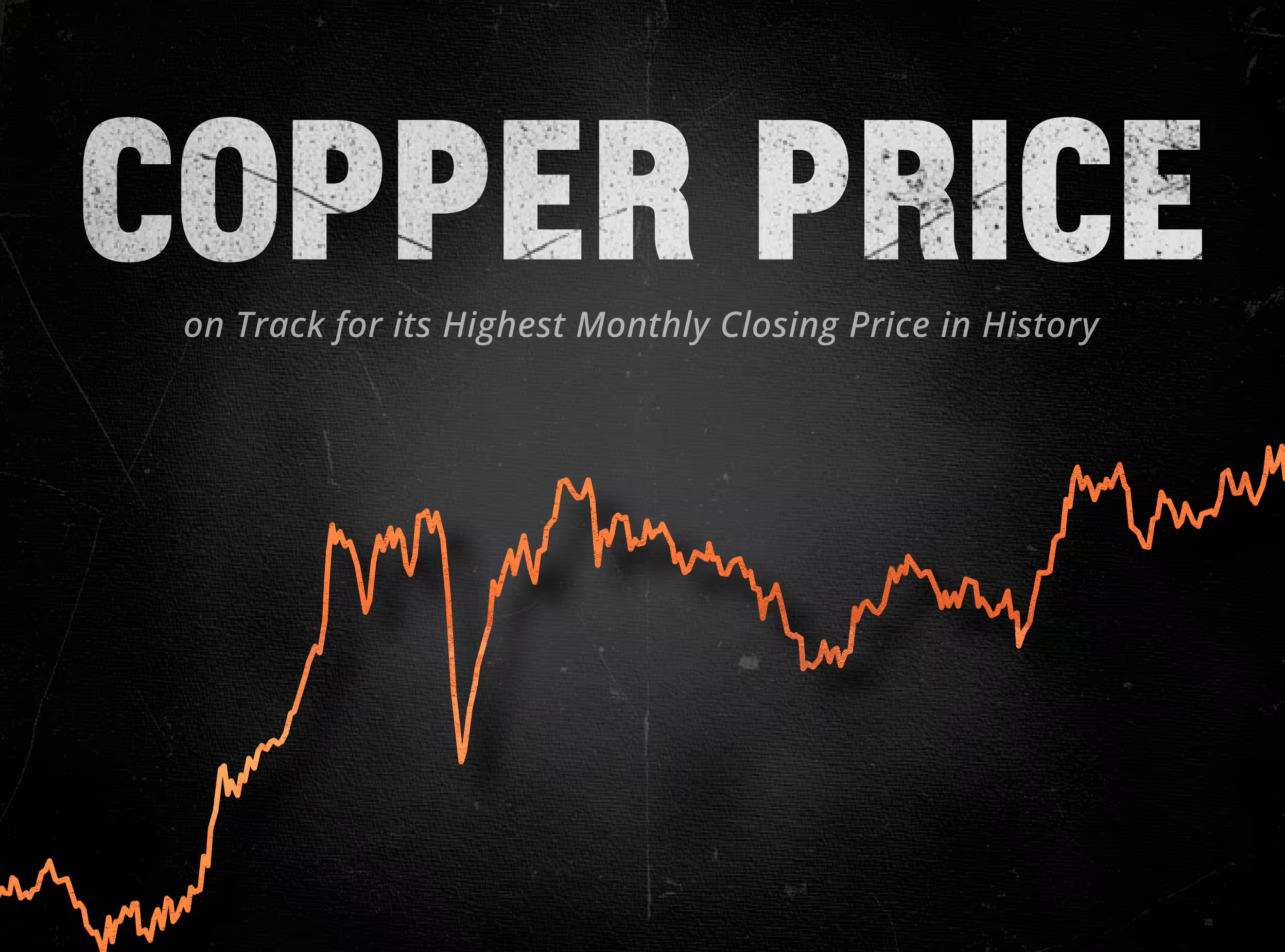
Copper on Track for Its Highest Monthly Close on Record: A Look at the Drivers
Copper on Track for Its Highest Monthly Close on Record: A Look at the Drivers
Copper has spent most of 2026 doing something it had not done in a quarter century: setting fresh records every few weeks. The COMEX contract printed an intraday all-time high of $6.71 per pound on May 13, and the May monthly close looks set to land at the top of the historical chart. In London, copper traded above $14,000 per tonne in mid-May, touching $14,196.50, within reach of the LME's January 29 record of $14,527.50.