Precious Metals
August 18, 2025
3 min
Precious Metals
%20Main.avif)

The global silver market is currently in the midst of a multi-year structural deficit, where total demand is consistently outpacing supply. According to the data presented in the Silver Survey 2025, published by the Silver Institute, this market imbalance has been a defining feature since 2021 and is projected to continue through 2025.
The accompanying infographic visualizes this critical shift in market fundamentals, providing context on the scale and duration of the deficit.
The Market's Reversal from Surplus to Deficit
An analysis of the historical data shows a clear inflection point in the silver market's balance.
Between 2016 and 2020, the market was characterized by annual surpluses, where total supply exceeded demand. As shown on the chart, this surplus ranged from +9.8 million ounces (Moz) to +64.1 Moz during this period.
In 2021, the dynamic saw a dramatic reversal. A significant surge in global demand, primarily from the industrial sector, surpassed the available supply, tipping the market into a deficit of -75.3 Moz.
Analyzing the Drivers of the Deficit
The persistence of the market deficit is rooted in the diverging trends of supply and demand.
- Demand: The sharp increase in demand is largely attributed to industrial applications, particularly in the photovoltaics (solar) and electronics sectors. This growth has created a new, higher baseline for annual silver consumption.
- Supply: Concurrently, total global supply, which includes both mine production and recycling, has not demonstrated equivalent growth. While supply has remained relatively stable, it has been insufficient to meet the pace of rising demand since 2021.
Quantifying a Five-Year Deficit
The core finding of the 2025 forecast is the duration and scale of this imbalance. The period from 2021 through the 2025 forecast marks five consecutive years of a market deficit.
Based on the data, the cumulative market deficit over this five-year span (2021-2025F) is projected to total 796 million ounces. This persistent shortfall between what is produced and consumed is a key conclusion of the Silver Institute's report.
Conclusion
The data from the Silver Survey 2025 illustrates a clear structural change in the silver market. The market has transitioned from a period of consistent surpluses to a sustained, multi-year deficit. This shift is fundamentally driven by robust industrial demand outstripping a more stable supply. This historical and forecast data provides essential, factual context for understanding the current state of the silver market's fundamentals.
Sponsored by:

Outcrop Silver is a leading explorer and developer focused on advancing its flagship Santa Ana high-grade silver project in Colombia. Leveraging a disciplined and seasoned team of professionals with decades of experience in the region. Outcrop Silver is dedicated to expanding current mineral resources through strategic exploration initiatives.
At the core of our operations is a commitment to responsible mining practices and community engagement, underscoring our approach to sustainable development. Our expertise in navigating complex geological and market conditions enables us to consistently identify and capitalize on opportunities to enhance shareholder value.
With a deep understanding of the Colombian mining landscape and a track record of successful exploration, Outcrop Silver is poised to transform the Santa Ana project into a significant silver producer, contributing positively to the local economy and setting new standards in the mining industry.
Learn more about Outcrop Silver at https://outcropsilver.com/
Disclaimer: This article is for informational and illustrative purposes only, based on data sourced from the Silver Survey 2025. It is not intended as financial advice. Investing in precious metals involves risk, and past performance is not indicative of future results.





Explore More
View All

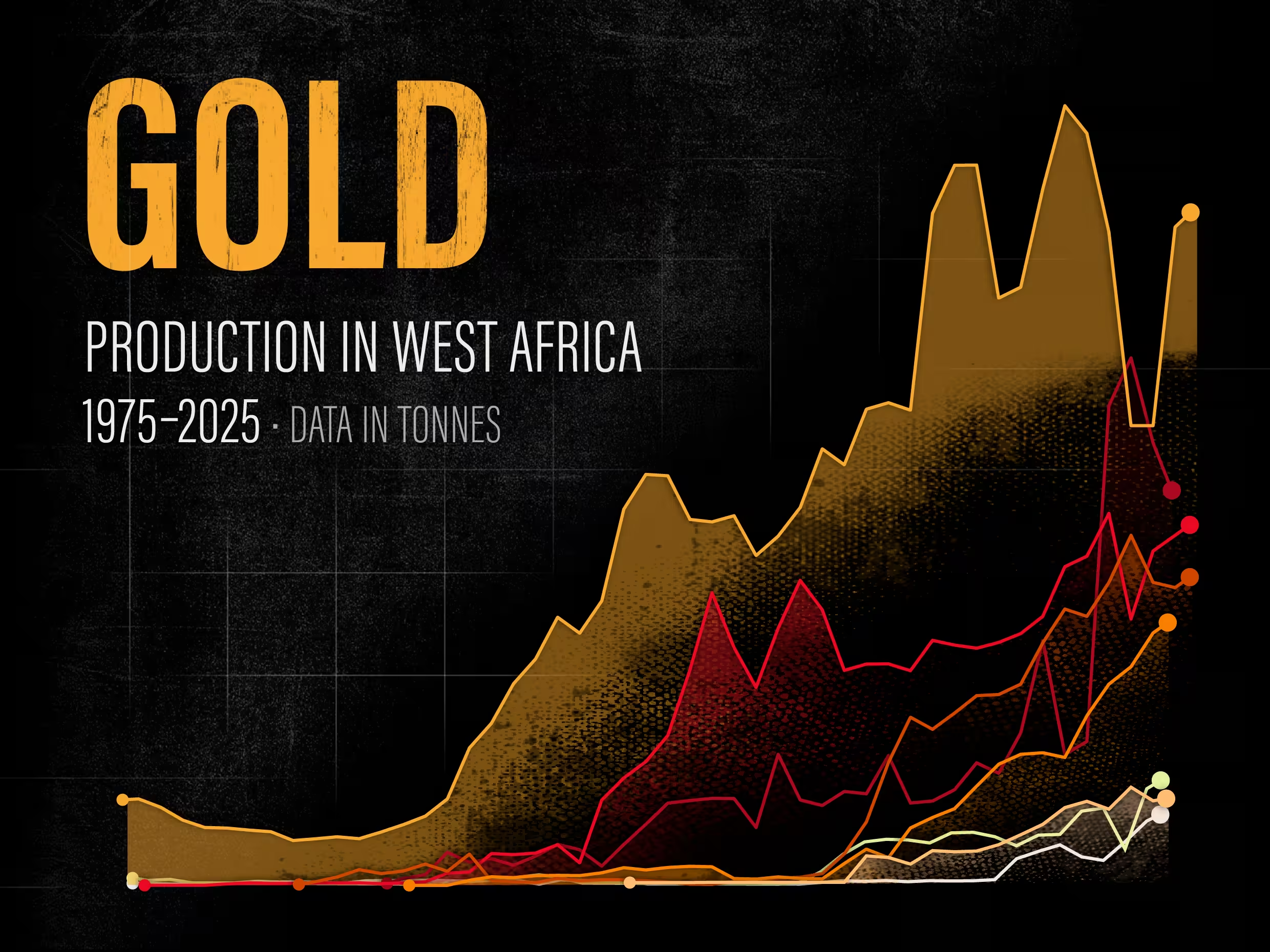
Charted: Fifty Years of Gold Production in West Africa
Charted: Fifty Years of Gold Production in West Africa
West Africa is in the middle of a gold run. In 2025 Ghana's output climbed more than 23 percent to a record 5.94 million ounces, holding its place as Africa's largest producer and now the sixth-largest in the world, and analysts expect the wider region to rebound about 8 percent in 2026.
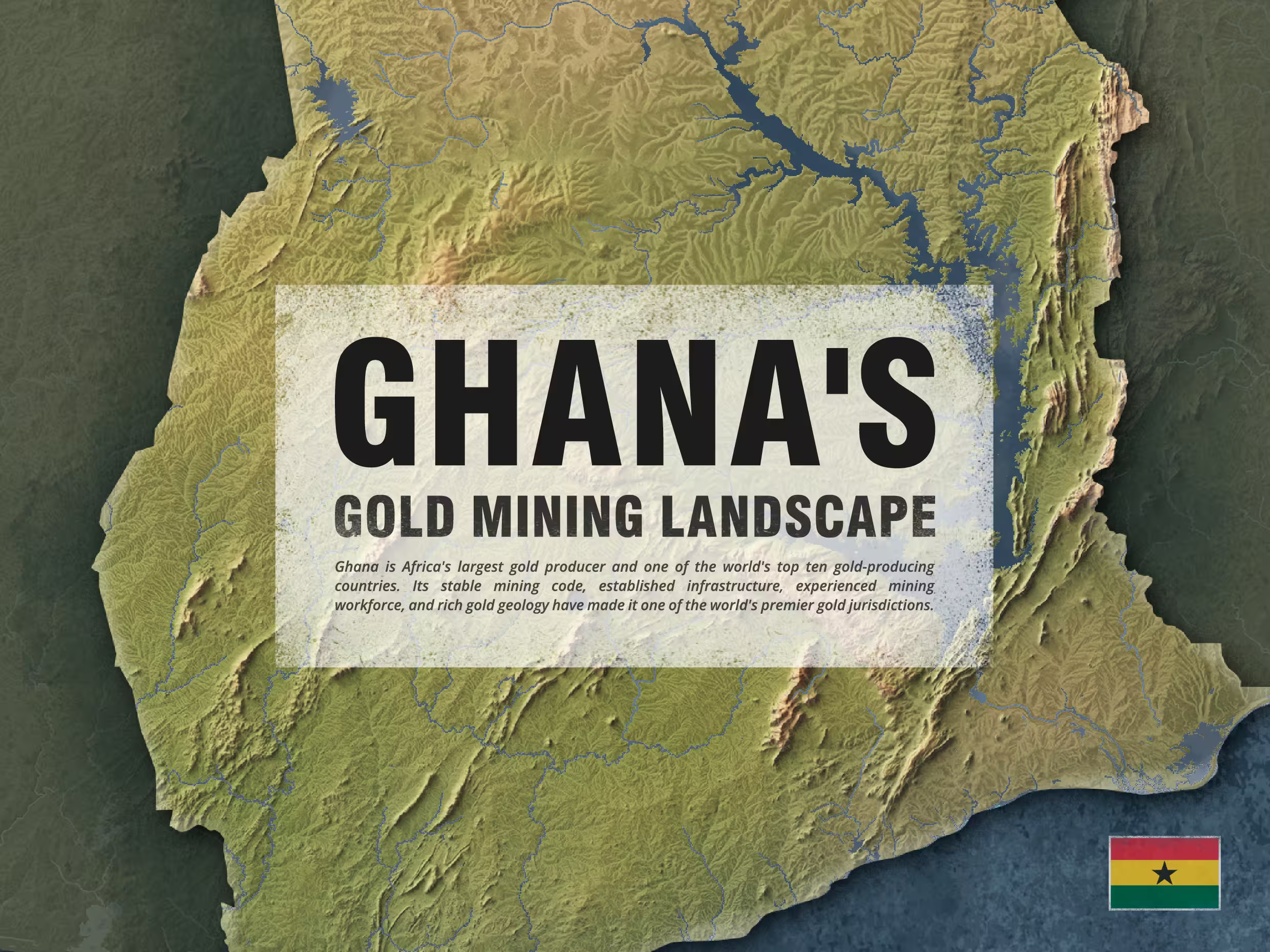
Ghana's Gold Mining Landscape: A Story Written in Ancient Rock
Ghana's Gold Mining Landscape: A Story Written in Ancient Rock
Ghana is one of the world's most significant gold-producing countries, and in 2025 it remained the largest in Africa, with national output reaching about 6 million ounces. But the numbers are only the surface. Ghana's gold reaches back more than two billion years into the rock beneath it, shaped by ancient mountain-building forces and worked by human hands for well over a century.
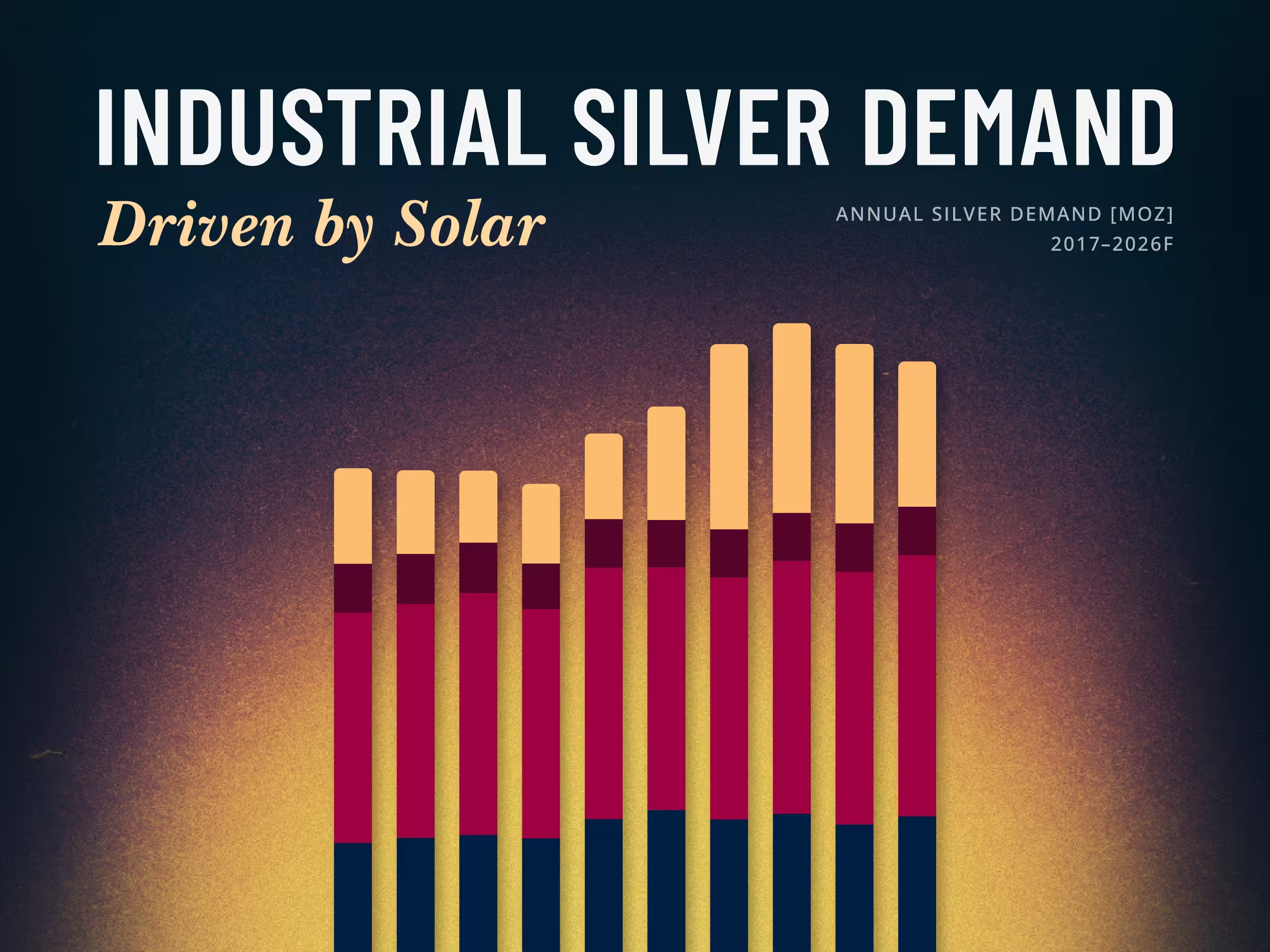
Solar Is Silver's Largest Industrial Market, and Not Easily Replaced
Solar Is Silver's Largest Industrial Market, and Not Easily Replaced
When LONGi Green Energy, the world's largest solar module maker, told investors on January 5, 2026 that it would begin mass-producing base-metal solar cells in the second quarter, it put a number on a pressure the whole industry feels. Solar is the largest single application within silver's industrial demand, and as the metal ran to a record above $121 an ounce in January, rising silver costs pushed manufacturers to accelerate efforts to reduce the metal per cell.

Silver in the Data Center: How AI's Power Crunch Is Building a New Pillar of Industrial Demand
Silver in the Data Center: How AI's Power Crunch Is Building a New Pillar of Industrial Demand
In early 2026, the artificial intelligence narrative shifted abruptly from software capabilities to physical hardware constraints. With tech giants committing hundreds of billions to new infrastructure—pushing global hyperscaler capital expenditures past $600 billion this year—the industry has collided with a new primary bottleneck: a severe power and thermal crunch.