Copper
November 26, 2025
2 min
Copper


If you are tracking the commodities market, the latest note from UBS—the world’s largest global wealth manager—signals a "perfect storm" for copper, as reported by Reuters. This forecast carries significant weight; when UBS shifts its "House View," it often signals where institutional capital will flow next.
The bank has aggressively raised its price forecasts, citing a collision between tightening global supply and fueled demand from the green energy transition.
📈 The Trajectory: Reaching New Highs
UBS’s updated projections paint a bullish picture for the next year. The bank has raised its March 2026 forecast by $750 to $11,500 per metric ton, and pushed its targets for June and September 2026 up by $1,000 each.
Most notably, UBS introduced a new target for December 2026, predicting prices will climb significantly:
New Target: UBS predicts copper prices will hit $13,000 per ton by December 2026.
As illustrated in the forecast above, this upward momentum is fueled by long-term demand from electrification. UBS expects global copper demand to grow by 2.8% annually through 2026, driven by:
- Electric Vehicles (EVs)
- Power-grid investments
- The booming data center sector
📉 The Widening Deficit: Where is the Supply?
While demand creates the pull, the supply side is providing the push. UBS warns that the gap between how much copper the world needs and how much is available is widening significantly.
The bank has drastically increased its market deficit forecasts. Falling inventories and persistent supply risks are expected to keep market conditions extremely tight.

What is driving this scarcity? UBS points to "persistent mine disruptions" as a key factor. Specific challenges cited include:
- Indonesia: Production halts at Freeport-McMoRan’s Grasberg mine following a fatal incident.
- Chile: A slower-than-expected output recovery.
- Peru: Recurring protests affecting operations.
Consequently, UBS has trimmed its refined copper production growth estimates to just 1.2% for 2025.





Explore More
View All


Most Major Copper Discoveries Since 1990 Are Still Not Mines.
Most Major Copper Discoveries Since 1990 Are Still Not Mines.
In May 2025, a joint venture of Lundin Mining and BHP released a resource estimate for its Vicuña district in the Andes, which S&P Global ranked as home to the largest greenfield copper discovery in 30 years. Per the same resource statement, the combined Filo del Sol and Josemaria deposits hold 13 million tonnes of contained copper in measured and indicated resources.
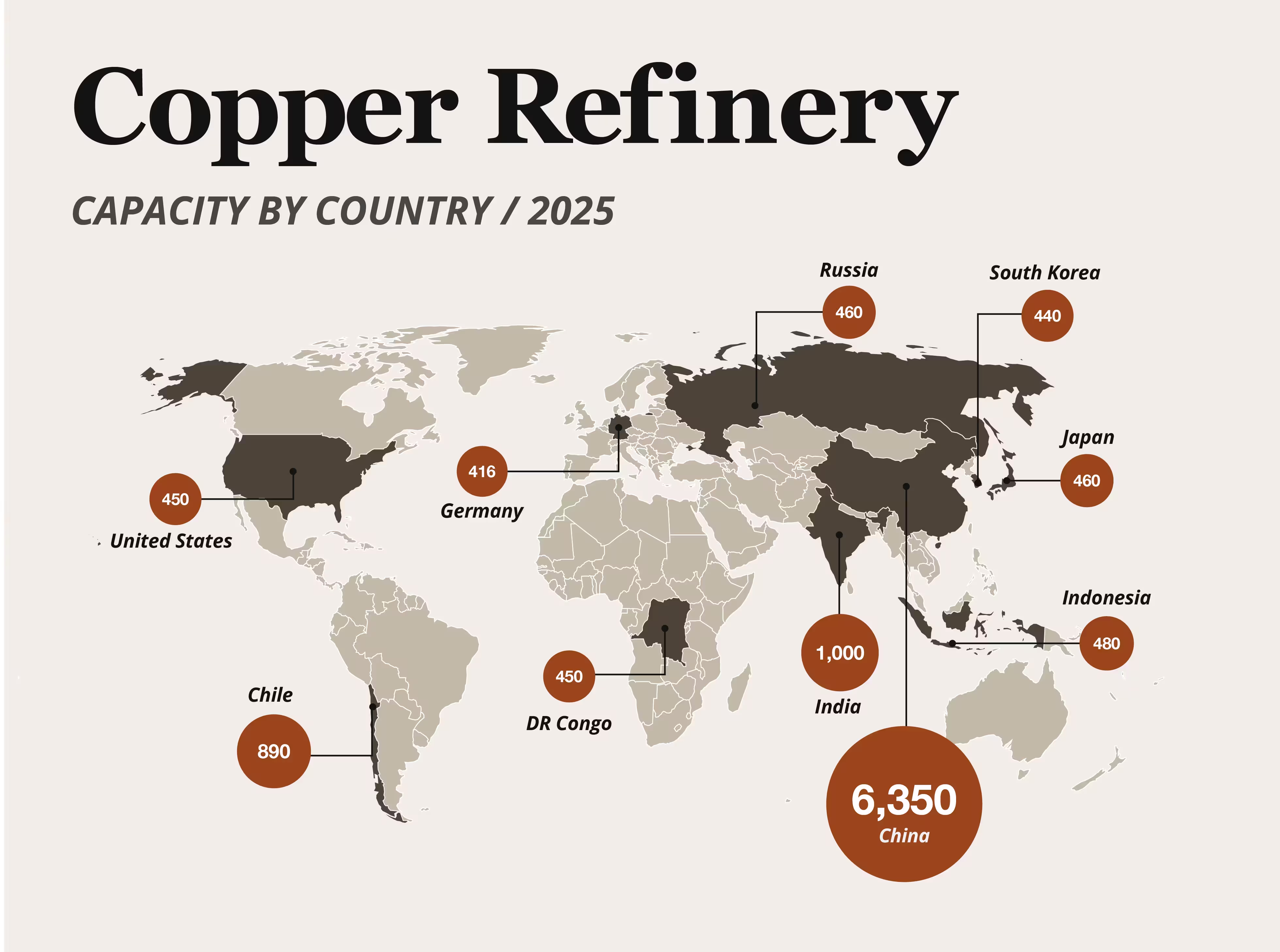
China Holds 56% of the Capacity at the World's 21 Largest Copper Refineries
China Holds 56% of the Capacity at the World's 21 Largest Copper Refineries
Indonesia's circle on the map above stands for a single plant: the Manyar refinery in East Java, operated by PT Freeport Indonesia, with 480,000 tonnes a year of capacity, according to the International Copper Study Group. It has been shut since the fourth quarter of 2025, after a mudflow at the Grasberg mine cut off its concentrate supply, and is due to restart this month at below 30% of capacity.

Ranked: The World's Largest Copper Mines (2025)
Ranked: The World's Largest Copper Mines (2025)
Copper has spent 2026 setting records, touching an intraday COMEX high of $6.71 per pound on May 13 amid AI-driven demand and supply shocks, against a backdrop where the ICSG now forecasts a 150,000-tonne deficit for 2026. In a market this tight, where the deficit thesis turns on lost tonnes, the question of where the world's copper actually comes from carries unusual weight.

Copper on Track for Its Highest Monthly Close on Record: A Look at the Drivers
Copper on Track for Its Highest Monthly Close on Record: A Look at the Drivers
Copper has spent most of 2026 doing something it had not done in a quarter century: setting fresh records every few weeks. The COMEX contract printed an intraday all-time high of $6.71 per pound on May 13, and the May monthly close looks set to land at the top of the historical chart. In London, copper traded above $14,000 per tonne in mid-May, touching $14,196.50, within reach of the LME's January 29 record of $14,527.50.