Precious Metals
December 10, 2025
2 min
Precious Metals


While physical gold is a store of value, gold mining stocks are a leveraged bet on the metal itself.
When bullion prices rise, miners often outperform the commodity they produce. This graphic visualizes the stock price performance of four of the world's largest gold producers from December 2022 to December 2025, showing just how explosive that leverage can be.
The Leaderboard (2022–2025)
As of December 3, 2025, the sector has seen a massive divergence in returns. Here is how the giants stack up:
AngloGold Ashanti leads the field with a 341% increase, while Newmont, despite being the world's largest producer, trailed with a 65% gain.
The "Gold-to-Miner" Multiplier
Why the triple-digit returns? The answer is operational leverage.
Mining companies have high fixed costs (labor, equipment, energy). Once the price of gold covers these costs, nearly every additional dollar flows straight to the bottom line. A 10% rise in the gold price can often lead to a 50% jump in a miner's profit margins.
Why The Divergence?
While the sector moves together, execution is key. AngloGold and Agnico Eagle separated themselves from the pack through superior cost control and jurisdiction management. Meanwhile, the two largest players faced significant headwinds:
- Newmont (NEM): The giant’s performance was weighed down by the complexity of integrating its massive Newcrest acquisition and a costly, months-long strike at its Peñasquito mine in Mexico (2023), which severely impacted free cash flow during a critical period for gold prices.
- Barrick Gold (GOLD): While profitable, Barrick struggled with geopolitical friction, notably disputes with the military government in Mali regarding its Loulo-Gounkoto complex, as well as a slower-than-expected ramp-up at its Pueblo Viejo expansion project.
Data Source: Market data and stock performance metrics sourced via TradingView. Performance data covers the period from December 2022 to December 3, 2025. Returns are calculated based on share price appreciation and do not include reinvested dividends unless otherwise noted.
Disclaimer: The content provided in this article and infographic is for informational and educational purposes only and does not constitute financial or investment advice. Past performance is not indicative of future results.




Explore More
View All


The World's 20 Largest Primary Silver Mines by 2025 Output
The World's 20 Largest Primary Silver Mines by 2025 Output
The largest silver producer among the world's primary silver mines in 2025 sat not in Mexico but in southwestern Bolivia. San Cristóbal, a large open-pit silver-zinc-lead mine run by Minera San Cristóbal, produced 17.6 million ounces of silver, narrowly ahead of Mexico's Juanicipio at the same rounded figure, in new Metals Focus data on the 20 largest primary silver mines. These are the operations where silver is a defining product rather than an incidental byproduct of lead, zinc and gold. The list runs from centuries-old mines in Mexico's silver belt to remote sites in the Andes, the Australian outback and the Alaskan wilderness. Eight of the 20 sit in Mexico, together about 44% of the total, while the rest are spread across the Americas, Asia, Africa and Australia.

Central Banks Have Been Net Gold Buyers Since 2010, After Two Decades of Net Selling
Central Banks Have Been Net Gold Buyers Since 2010, After Two Decades of Net Selling
Central banks bought more gold between April and June 2026 than in any second quarter on record, according to a World Gold Council report published on July 30. That keeps them net buyers this year, as they have been every year since 2010. Underneath, the picture is changing. Russia and Türkiye, both big buyers in the past, have been selling.

Gold Mines in West Africa: Two Billion Years in the Making
Gold Mines in West Africa: Two Billion Years in the Making
The nine West African countries with significant reported output produced about 15% of the world's mined gold in 2025, according to Metals Focus and World Gold Council data. Almost every mine on the map above was built in the past 25 years, and four more reached production in the last eighteen months: Lafigué in Côte d'Ivoire in June 2024, Kiaka in Burkina Faso in June 2025, Ahafo North in Ghana in October 2025 and Kiniero in Guinea in December 2025.
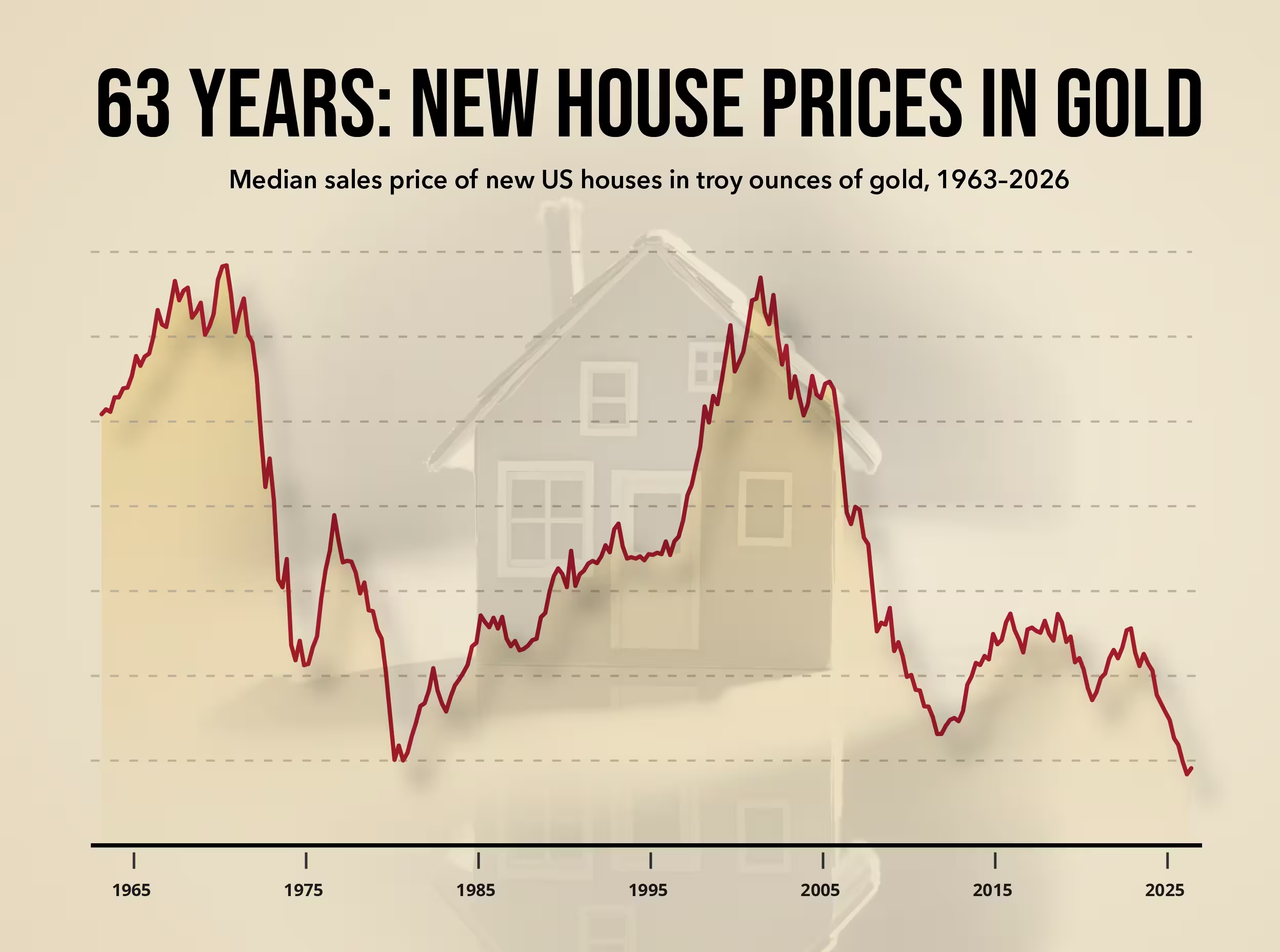
A Median New US Home Now Costs Less Than 100 Ounces of Gold
A Median New US Home Now Costs Less Than 100 Ounces of Gold
The US Census Bureau's July new-home report, released on August 25, put the median price of a newly built house at $393,800. HousingWire noted that was the lowest since July 2021. In dollars, the market has moved within a narrow band: the quarterly median has stayed between $408,500 and $435,400 since 2023.