Precious Metals
May 20, 2025
2 min
Precious Metals


Over the past decade, industrial demand has steadily claimed a larger share of global silver mine production. This trend reflects silver’s expanding role in technology and manufacturing, especially in areas such as renewable energy and electronics.
In 2014 and 2015, industrial uses made up about 51% of global mine supply. Since then, that share has grown consistently—rising to 70% in 2022, and reaching 83% in 2024. For 2025, industrial demand is forecast to represent 81% of mine production.
This growth has been driven by increased demand from sectors such as:
- Solar energy (photovoltaics)
- Electronics and semiconductors
- Electric vehicles (EVs)
- Other high-tech and industrial applications
As these industries expand, their need for silver continues to rise, gradually shifting the balance of silver consumption away from traditional uses like investment, jewelry, and silverware.
While recycling adds to overall supply, the growing share of mine output going to industrial users is becoming a more prominent factor in the silver market. It highlights the importance of monitoring how future technological trends might influence silver demand and supply dynamics.
Sponsored by:

Eloro Resources Ltd. is a mineral exploration company advancing a world-class silver and tin project in Bolivia’s historic Potosí Department. Its flagship asset, the Iska Iska Project, ranks among the top five undeveloped global resources in terms of scale for both tin and silver.
This significant grassroots discovery remains open in multiple directions, offering substantial potential for continued expansion and resource enhancement. Iska Iska benefits from strong infrastructure access and a deeply rooted presence in Bolivia, supported by an experienced management team and meaningful community engagement.
Eloro’s strategy is focused on resource growth, strategic partnerships, and establishing a leading position within the global mining sector.
Learn more at elororesources.com.
Sources: World Silver Survey 2025, published by The Silver Institute. Infographic by MiningVisuals.
Disclaimer: This content is for informational purposes only. Data and projections, including those for 2025, are based on current information and are subject to change. While we strive for accuracy, we do not guarantee the completeness or reliability of the information provided. This material does not constitute investment advice. Please conduct your own due diligence or consult a financial advisor.





Explore More
View All

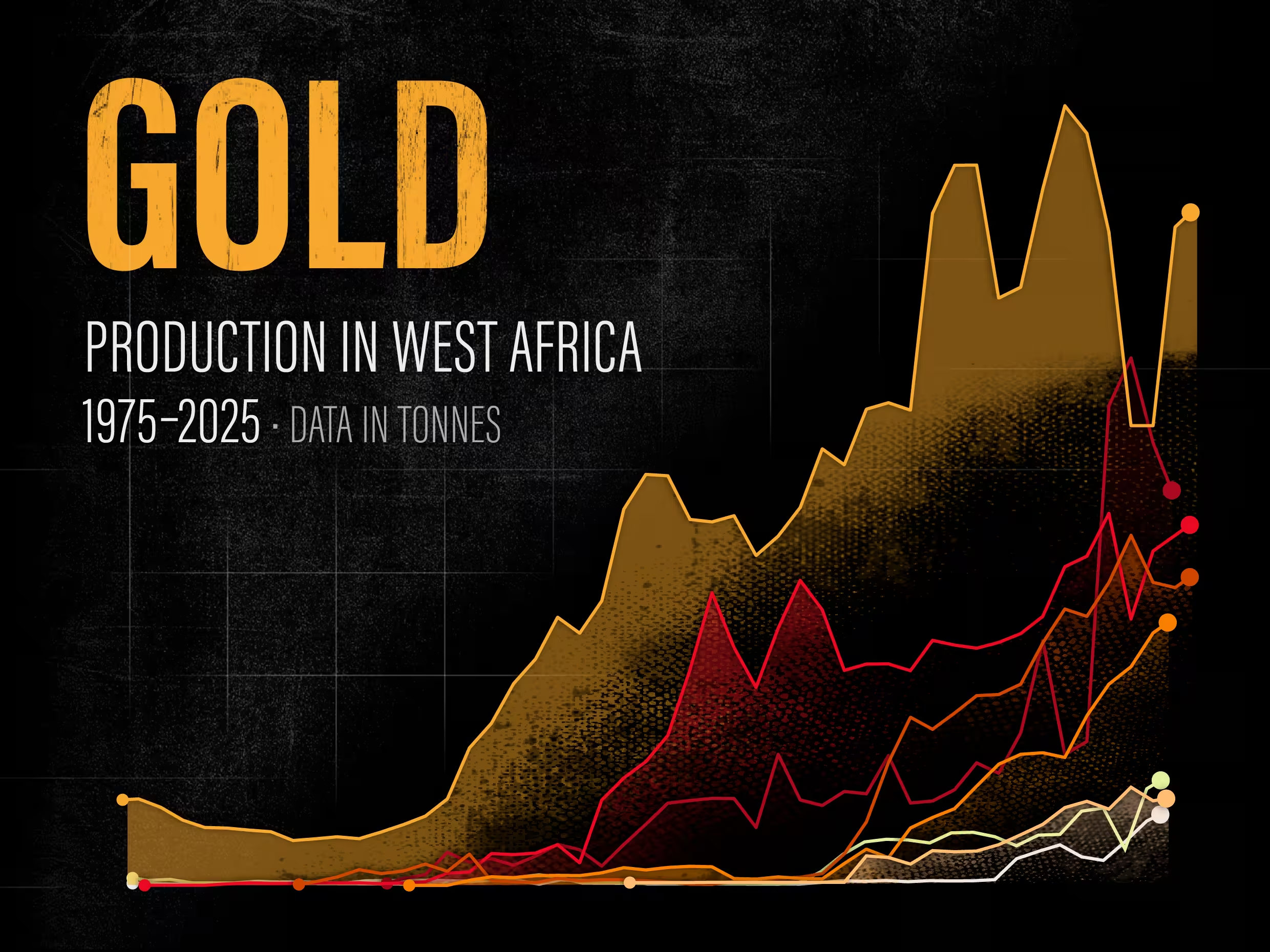
Charted: Fifty Years of Gold Production in West Africa
Charted: Fifty Years of Gold Production in West Africa
West Africa is in the middle of a gold run. In 2025 Ghana's output climbed more than 23 percent to a record 5.94 million ounces, holding its place as Africa's largest producer and now the sixth-largest in the world, and analysts expect the wider region to rebound about 8 percent in 2026.

Ghana's Gold Mining Landscape: A Story Written in Ancient Rock
Ghana's Gold Mining Landscape: A Story Written in Ancient Rock
Ghana is one of the world's most significant gold-producing countries, and in 2025 it remained the largest in Africa, with national output reaching about 6 million ounces. But the numbers are only the surface. Ghana's gold reaches back more than two billion years into the rock beneath it, shaped by ancient mountain-building forces and worked by human hands for well over a century.
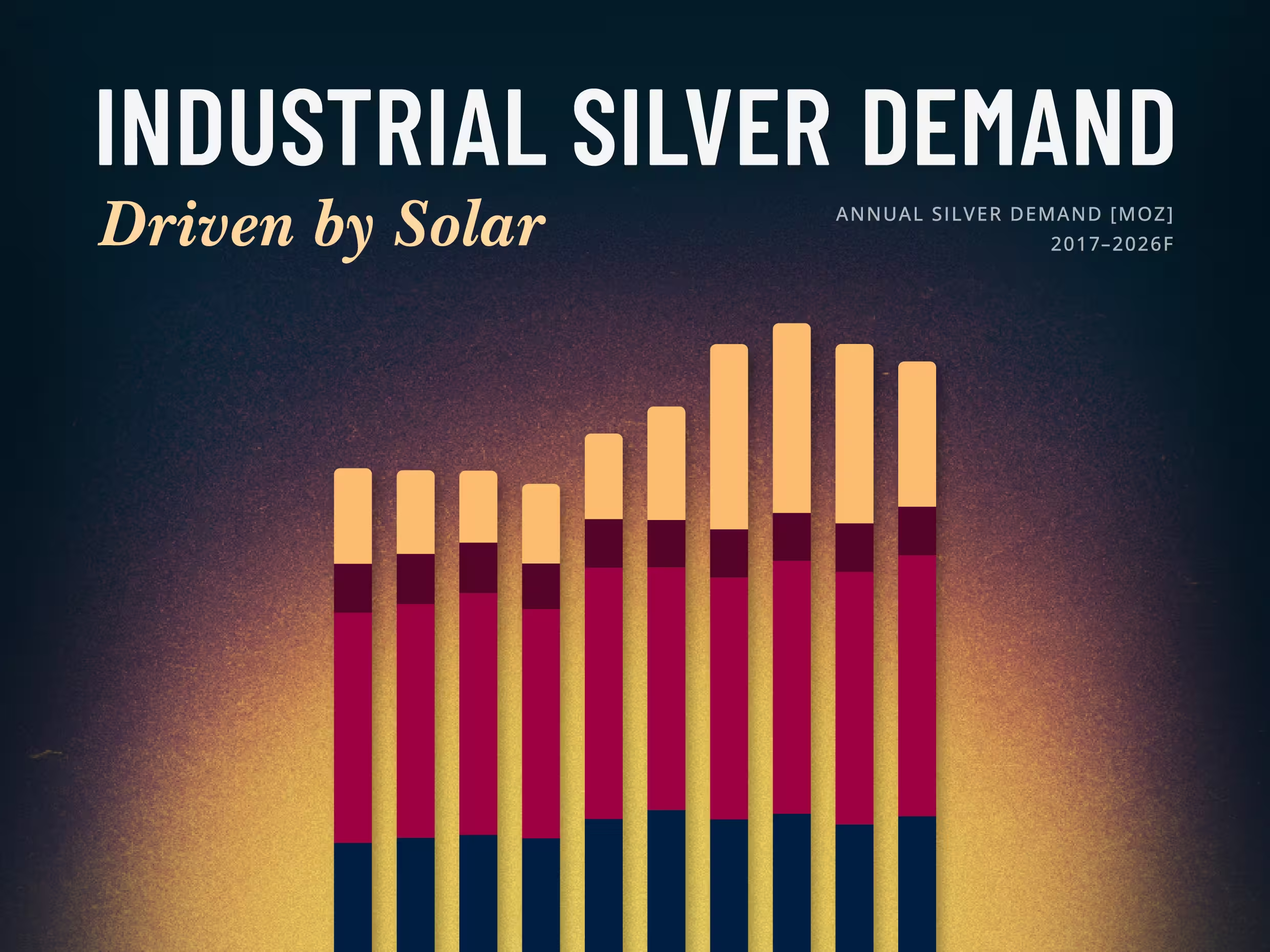
Solar Is Silver's Largest Industrial Market, and Not Easily Replaced
Solar Is Silver's Largest Industrial Market, and Not Easily Replaced
When LONGi Green Energy, the world's largest solar module maker, told investors on January 5, 2026 that it would begin mass-producing base-metal solar cells in the second quarter, it put a number on a pressure the whole industry feels. Solar is the largest single application within silver's industrial demand, and as the metal ran to a record above $121 an ounce in January, rising silver costs pushed manufacturers to accelerate efforts to reduce the metal per cell.
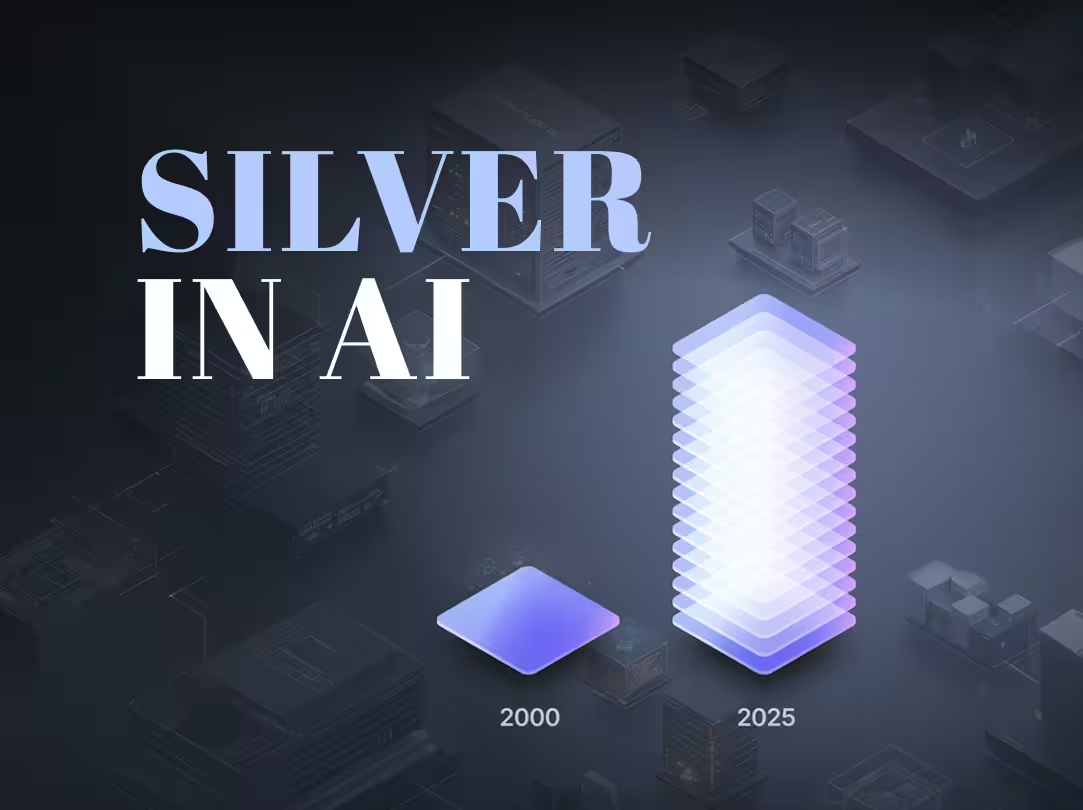
Silver in the Data Center: How AI's Power Crunch Is Building a New Pillar of Industrial Demand
Silver in the Data Center: How AI's Power Crunch Is Building a New Pillar of Industrial Demand
In early 2026, the artificial intelligence narrative shifted abruptly from software capabilities to physical hardware constraints. With tech giants committing hundreds of billions to new infrastructure—pushing global hyperscaler capital expenditures past $600 billion this year—the industry has collided with a new primary bottleneck: a severe power and thermal crunch.