Precious Metals
November 28, 2024
2 min
Precious Metals
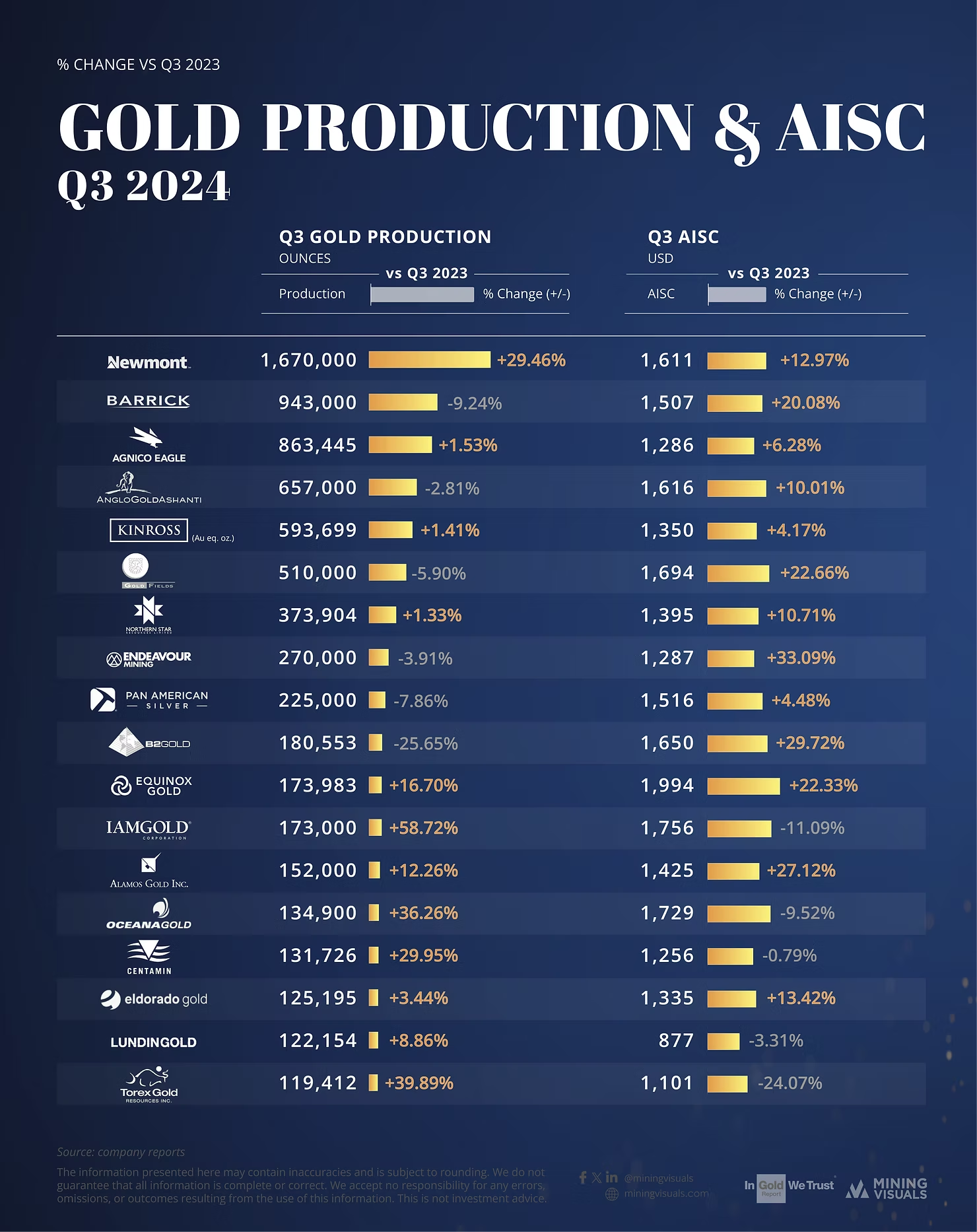

In Q3 2024, gold producers displayed mixed results in both production and all-in sustaining costs (AISC) compared to the same period in 2023.
Gold Production Highlights
- Newmont Corporation led the pack with a 29.5% production increase, reaching 1.67 million ounces, up from 1.29 million ounces in Q3 2023. This growth stems from operational improvements and the acquisition of Newcrest Mining, which added key assets like the Cadia and Lihir mines.
- Barrick Gold Corp saw a 9.2% decline in output, producing 943,000 ounces. This drop was largely due to reduced production at the Nevada Gold Mines joint venture, particularly at the Carlin and Cortez mines. Despite higher costs and inflationary pressures, Barrick remains optimistic about stronger Q4 performance.
- Iamgold Corp posted an impressive 58.7% rise to 173,000 ounces, driven by strong performances at the Essakane and Westwood mines. The Côté Gold mine in Ontario, which began full production, contributed an additional 20,000 ounces.
- Torex Gold Resources Inc achieved a 39.9% increase, largely due to the efficient ramp-up of production at the El Limón-Guajes mine in Mexico.
- B2Gold Corp experienced a 25.7% production drop, producing 180,553 ounces, impacted by operational issues at its Fekola Mine in Mali, including equipment failures and weather disruptions. The company has revised its annual guidance downward.
AISC Trends
AISC, a key metric of operational efficiency, varied across producers:
- Newmont Corporation saw a 12.9% increase in AISC, now at $1,611/oz, due to inflation, labor strikes, and challenges at mines like Merian and Cerro Negro.
- Barrick Gold reported a 20.1% rise in AISC to $1,507/oz, driven by inflationary pressures on labor, energy, and materials, as well as costs tied to project ramp-ups.
- Torex Gold Resources Inc significantly reduced AISC by 24.1% to $1,101/oz, thanks to improved operational efficiency, higher gold prices, and effective cost management.
- Alamos Gold Inc lowered AISC by 27.1%, now at $1,425/oz, due to increased production and operational efficiencies at Island Gold and Mulatos, along with strong output from the new Magino Mine.
Source: Quarterly reports
The information presented here may contain inaccuracies and is subject to rounding. We do not guarantee that all information is complete or correct. We accept no responsibility for any errors, omissions, or outcomes resulting from the use of this information. This is not investment advice.





Explore More
View All


The World's 20 Largest Primary Silver Mines by 2025 Output
The World's 20 Largest Primary Silver Mines by 2025 Output
The largest silver producer among the world's primary silver mines in 2025 sat not in Mexico but in southwestern Bolivia. San Cristóbal, a large open-pit silver-zinc-lead mine run by Minera San Cristóbal, produced 17.6 million ounces of silver, narrowly ahead of Mexico's Juanicipio at the same rounded figure, in new Metals Focus data on the 20 largest primary silver mines. These are the operations where silver is a defining product rather than an incidental byproduct of lead, zinc and gold. The list runs from centuries-old mines in Mexico's silver belt to remote sites in the Andes, the Australian outback and the Alaskan wilderness. Eight of the 20 sit in Mexico, together about 44% of the total, while the rest are spread across the Americas, Asia, Africa and Australia.

Central Banks Have Been Net Gold Buyers Since 2010, After Two Decades of Net Selling
Central Banks Have Been Net Gold Buyers Since 2010, After Two Decades of Net Selling
Central banks bought more gold between April and June 2026 than in any second quarter on record, according to a World Gold Council report published on July 30. That keeps them net buyers this year, as they have been every year since 2010. Underneath, the picture is changing. Russia and Türkiye, both big buyers in the past, have been selling.

Gold Mines in West Africa: Two Billion Years in the Making
Gold Mines in West Africa: Two Billion Years in the Making
The nine West African countries with significant reported output produced about 15% of the world's mined gold in 2025, according to Metals Focus and World Gold Council data. Almost every mine on the map above was built in the past 25 years, and four more reached production in the last eighteen months: Lafigué in Côte d'Ivoire in June 2024, Kiaka in Burkina Faso in June 2025, Ahafo North in Ghana in October 2025 and Kiniero in Guinea in December 2025.
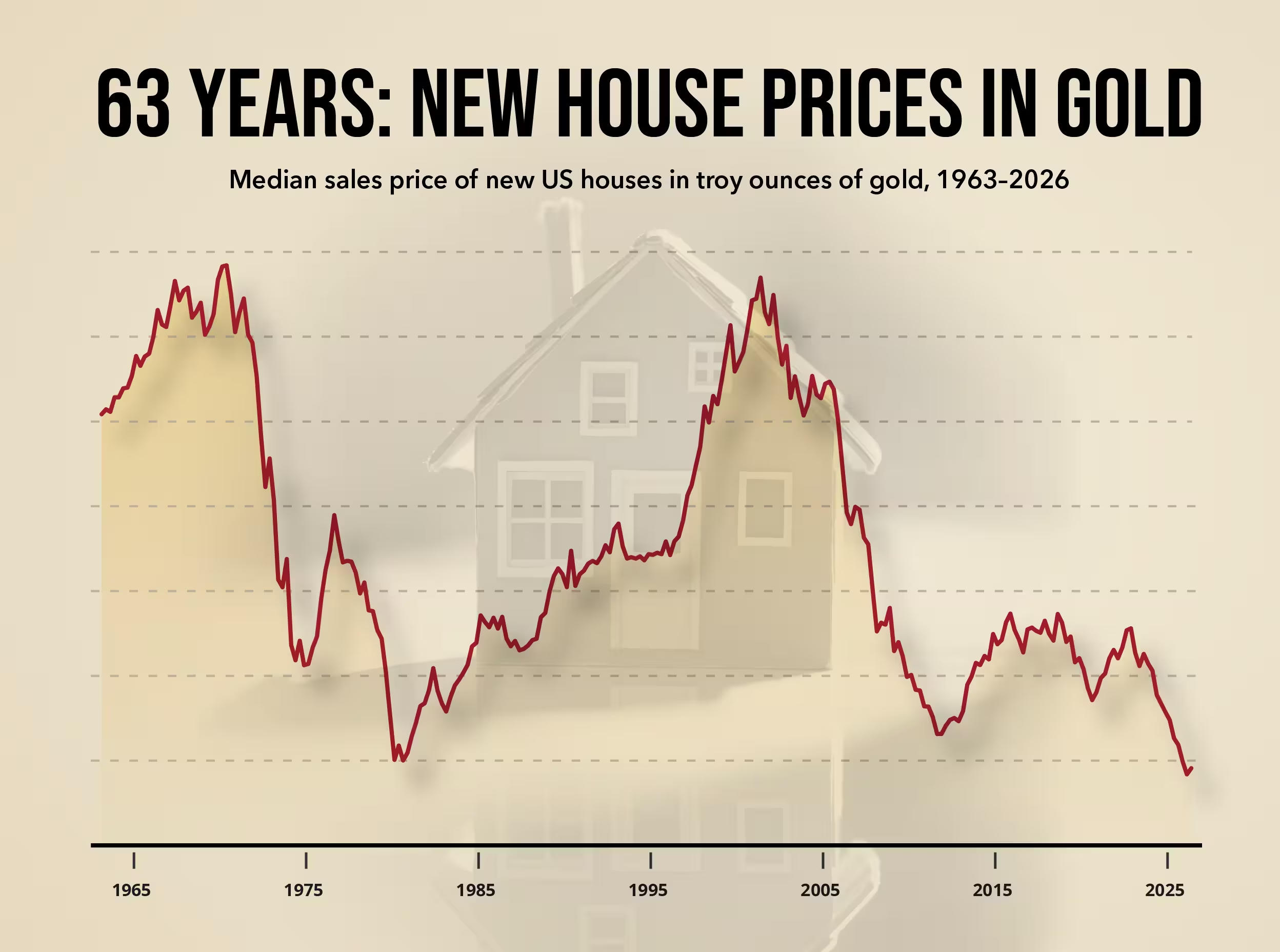
A Median New US Home Now Costs Less Than 100 Ounces of Gold
A Median New US Home Now Costs Less Than 100 Ounces of Gold
The US Census Bureau's July new-home report, released on August 25, put the median price of a newly built house at $393,800. HousingWire noted that was the lowest since July 2021. In dollars, the market has moved within a narrow band: the quarterly median has stayed between $408,500 and $435,400 since 2023.