Precious Metals
June 10, 2025
2 min
Precious Metals


The global silver market is on track for a 117.7 million ounce (Moz) deficit this year, according to data from the World Silver Survey 2025, visualized in our latest infographic. This marks a significant period of market tightness. While robust demand (detailed in our main analysis here) tells one side of the story, a closer look at the supply landscape reveals critical, contrasting trends shaping silver's availability in 2025.
Mine Production: A Long-Term Contraction
Global silver mines are projected to yield 835 Moz in 2025. This output signifies a 7.23% decrease compared to 2016 levels, based on World Silver Survey 2025 data. Such a long-term decline in primary silver supply points to persistent challenges within the mining sector.

Industry analyses, including reports like the World Silver Survey, indicate these can stem from factors such as the maturation of major orebodies, shifting capital investment cycles, the extended timelines required for new mine development, fluctuating operational costs, and evolving regulatory environments in key silver-producing nations. This decrease from mining operations is a crucial factor in this year's overall market deficit.
Recycling Ramps Up, Offering Partial Relief
In contrast to falling mine output, silver recycling is experiencing a significant uptick. Projections from the World Silver Survey 2025 data show an anticipated 195 Moz from secondary sources in 2025, a notable increase of 24.06%. This rise in recycled volumes is often linked to improved efficiencies in collecting and processing end-of-life silver-bearing products, particularly industrial and electronic scrap. Supportive silver prices can also incentivize the flow of materials back into the supply chain. While this growth in recycling provides an important contribution, its overall volume is still considerably smaller than primary mine production.
The Bottom Line: A Persistent Market Imbalance
Despite the commendable growth in recycling, the increase from these secondary sources is not projected to fully offset the decrease in mine production and meet total global demand. The interplay of these supply dynamics—reduced primary output and increased, yet insufficient, recycling—is a key reason for the forecast market deficit in 2025.
Sponsored by:

Eloro Resources Ltd. is a mineral exploration company advancing a world-class silver and tin project in Bolivia’s historic Potosí Department. Its flagship asset, the Iska Iska Project, ranks among the top five undeveloped global resources in terms of scale for both tin and silver.
This significant grassroots discovery remains open in multiple directions, offering substantial potential for continued expansion and resource enhancement. Iska Iska benefits from strong infrastructure access and a deeply rooted presence in Bolivia, supported by an experienced management team and meaningful community engagement.
Eloro’s strategy is focused on resource growth, strategic partnerships, and establishing a leading position within the global mining sector.
Learn more at elororesources.com.
Sources: World Silver Survey 2025, published by The Silver Institute. Infographic by MiningVisuals.
Disclaimer: This analysis is based on data and projections sourced from the World Silver Survey 2025. While we believe the information to be reliable, we do not guarantee its accuracy or completeness. The views and forecasts expressed are subject to change without notice. This article is intended for general informational purposes and does not constitute financial or investment advice. Market conditions, including supply, demand, and prices, can fluctuate.





Explore More
View All

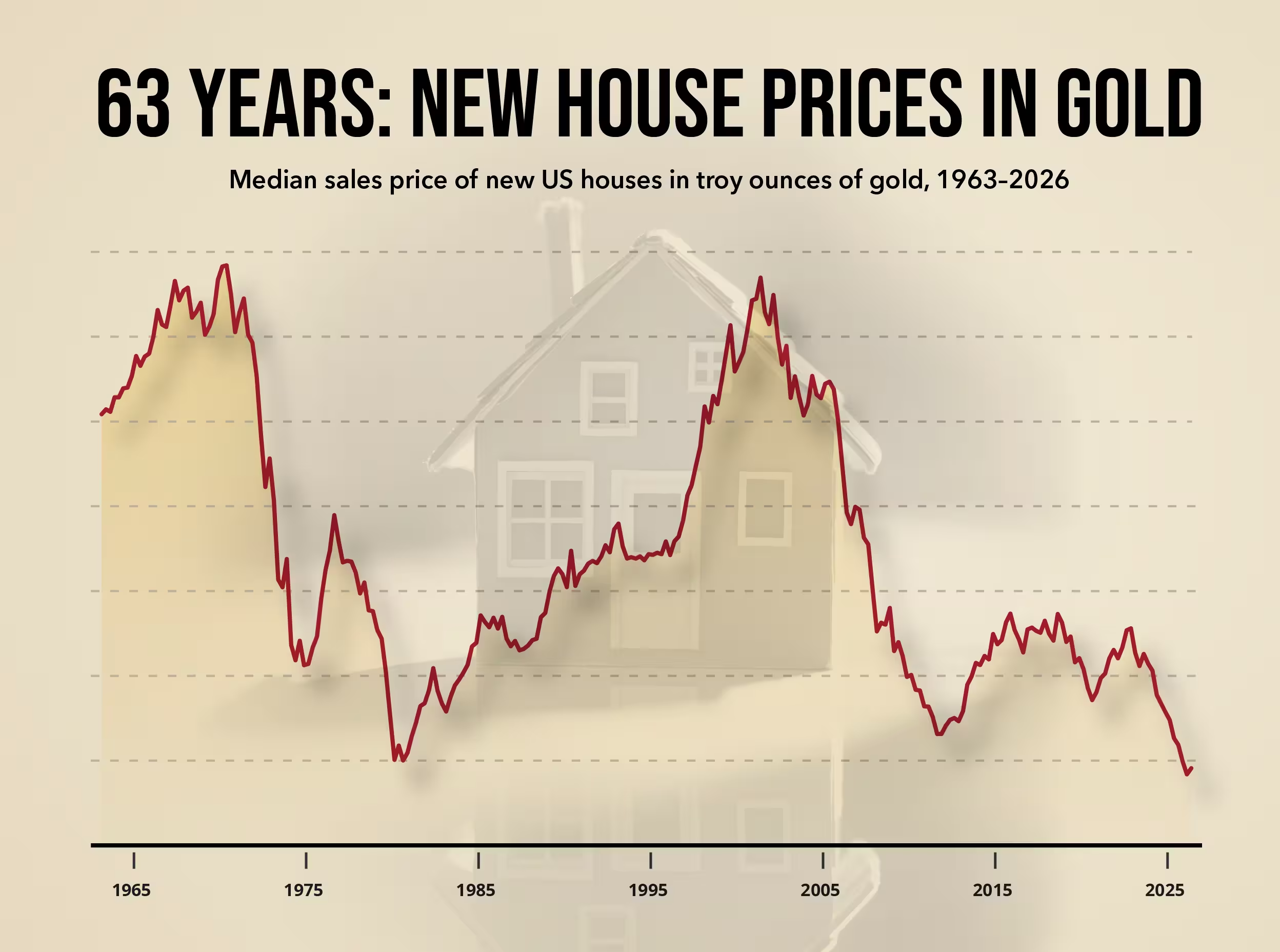
A Median New US Home Now Costs Less Than 100 Ounces of Gold
A Median New US Home Now Costs Less Than 100 Ounces of Gold
The US Census Bureau's July new-home report, released on August 25, put the median price of a newly built house at $393,800. HousingWire noted that was the lowest since July 2021. In dollars, the market has moved within a narrow band: the quarterly median has stayed between $408,500 and $435,400 since 2023.
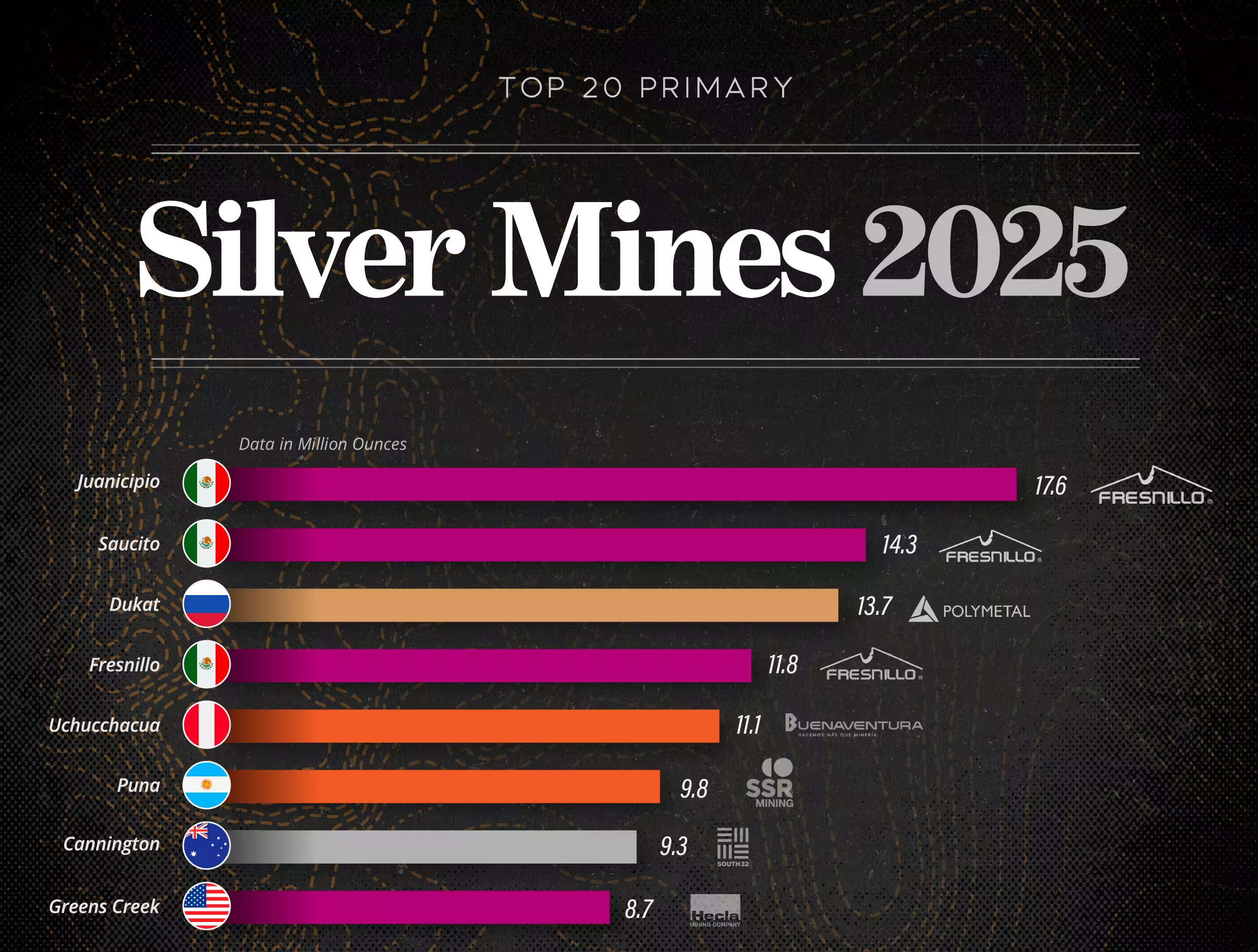
The World's 20 Largest Primary Silver Mines by 2025 Output
The World's 20 Largest Primary Silver Mines by 2025 Output
The single largest source of primary silver is a young mine in the Mexican state of Zacatecas. Juanicipio put out 17.6 million ounces in 2025, more than any other mine that earns its keep from silver itself rather than pulling it out as a byproduct of lead, zinc and gold. Fresnillo operates it and owns 56%; the other 44% changed hands in September 2025, when Pan American Silver completed a US$2.1 billion takeover of MAG Silver.
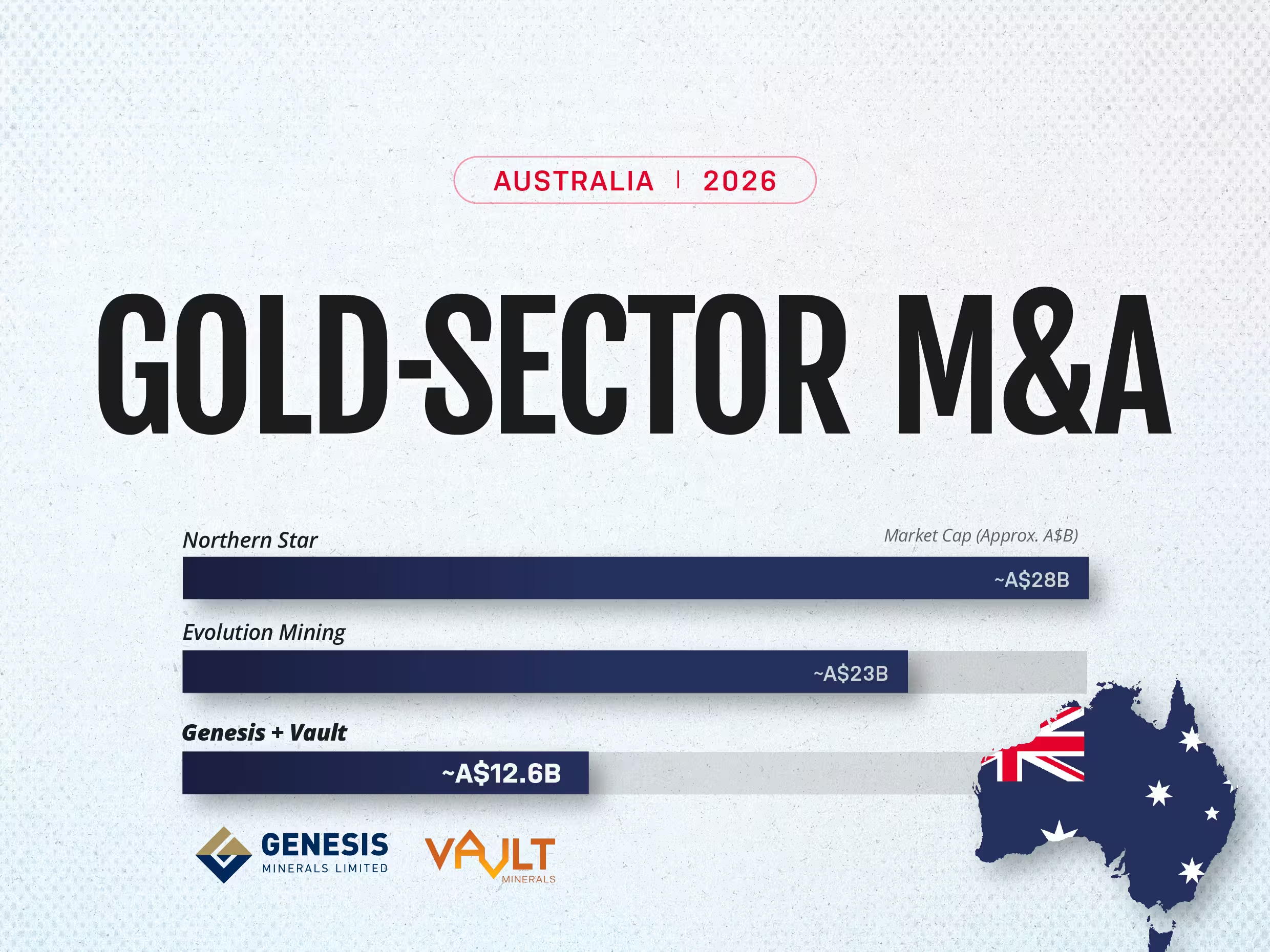
Gold's Record Run Has Set Off a Wave of Mining Mergers
Gold's Record Run Has Set Off a Wave of Mining Mergers
Gold hit an all-time high of about US$5,595 an ounce in January 2026 before settling near US$4,000, still far above the levels of a few years ago. That combination, record prices followed by a stable, still-profitable pullback, has done something a straight rally rarely does: it has opened a merger window.
.webp)
Three Ancient Belts Carry Ghana's Gold, and Investment Keeps Flowing to Them
Three Ancient Belts Carry Ghana's Gold, and Investment Keeps Flowing to Them
In March 2026, one of Ghana's own mining companies said it would invest about $1.2 billion in its operations at the Tarkwa and Damang gold mines. Both sit on the Ashanti belt, one of three narrow bands of ancient rock that carry almost all of Ghana's gold.