Precious Metals
June 11, 2025
2 min
Precious Metals


Since 1960, gold and silver have charted vastly different courses in the world of precious metals. While both have seen significant gains, the updated price chart reveals a clear divergence: gold has steadily climbed as a reliable safe haven, while silver's journey has been marked by pronounced volatility, driven by its dual role as both an investment and a critical industrial metal.
Gold: The Go-To Safe Haven
Gold's price has impressively climbed since 1960, with a massive +9,407% gain. Its journey took a dramatic turn after 1971, when the price was decoupled from the US dollar and allowed to float freely.
Big Moments for Gold:
- 1970s: High inflation and geopolitical instability caused a rush to safety, leading to the first major peak on the chart around 1980.
- Post-2008 Crisis: The 2008 financial meltdown triggered another significant surge, with gold hitting new highs around 2011 as investors sought security from volatile markets.
- Recent Times (2020+): The COVID-19 pandemic, renewed inflation, and global uncertainty have fueled another sharp climb, marking the chart's most dramatic ascent to date.
Throughout these decades, gold has consistently proven itself as the go-to asset when investors are concerned about currency devaluation and market instability.
Silver: Industrial Power, Volatile Prices
Silver has also seen a significant gain of +3,869%, but its path has been far more volatile. This is because silver has a dual identity: it is both a precious metal and a critical industrial commodity.
Key Points for Silver:
- 1970s & the "Silver Squeeze": Like gold, silver's price exploded in the inflationary 1970s. This period included the infamous "Silver Squeeze," where an attempt to corner the market sent prices to a dramatic peak in 1980 before a sharp collapse, clearly visible on the chart.
- Industrial Driver: Demand for silver in electronics, solar panels, and other industrial applications is a primary driver of its price. Economic booms can boost its value, while slowdowns often cause it to lag.
- Riding with Gold, But Wilder: Silver often follows the general direction of gold, especially during major economic events like the 2008 crisis. However, its price swings are typically more pronounced, making it a more volatile investment.
Gold Shines Brighter as a Store of Value
As the chart clearly shows, gold has delivered a higher overall return since 1960 and has acted as a more consistent safe haven during economic turmoil. Silver, with its crucial role in industry, offers a different, often more volatile, investment profile.
Source: tradingview.com
Disclaimer: This article is for general informational purposes only, based on historical trends and the accompanying infographic. Price data and interpretations may vary from other sources and are subject to change. This content is not financial or investment advice. Please conduct your own research and consult a professional advisor before making investment decisions. Information is current as of May 2025.




Explore More
View All

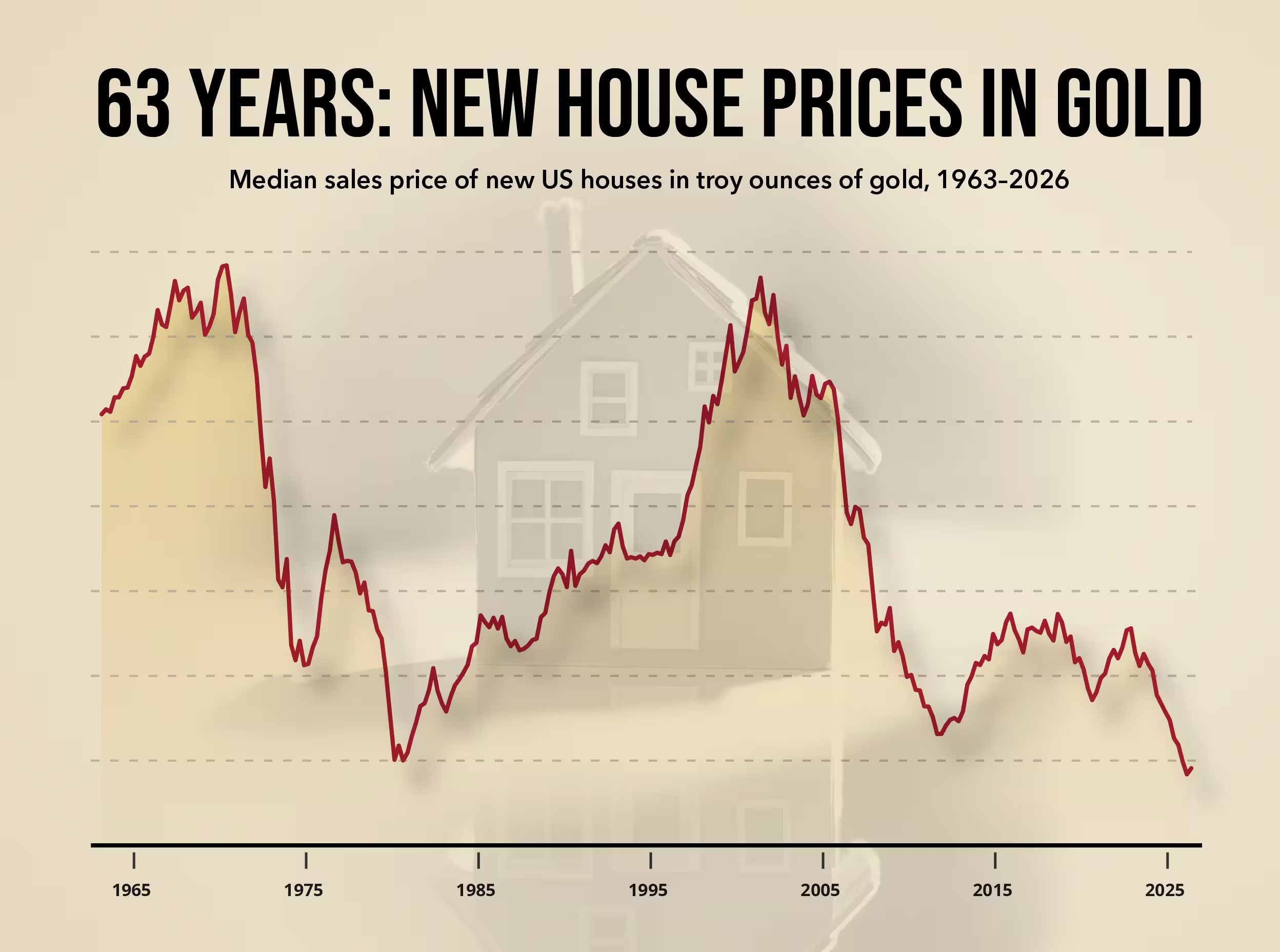
A Median New US Home Now Costs Less Than 100 Ounces of Gold
A Median New US Home Now Costs Less Than 100 Ounces of Gold
The US Census Bureau's July new-home report, released on August 25, put the median price of a newly built house at $393,800. HousingWire noted that was the lowest since July 2021. In dollars, the market has moved within a narrow band: the quarterly median has stayed between $408,500 and $435,400 since 2023.
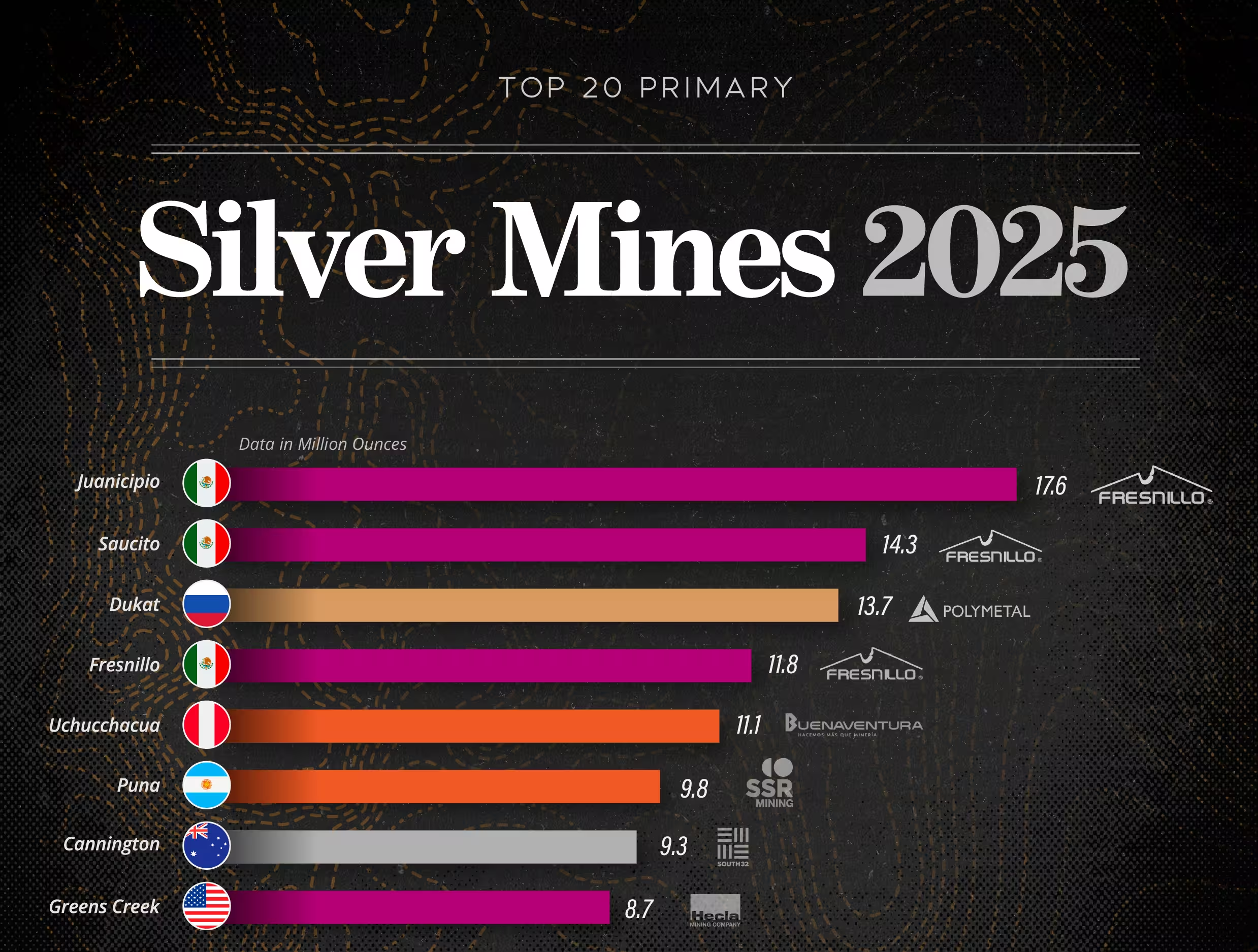
The World's 20 Largest Primary Silver Mines by 2025 Output
The World's 20 Largest Primary Silver Mines by 2025 Output
The single largest source of primary silver is a young mine in the Mexican state of Zacatecas. Juanicipio put out 17.6 million ounces in 2025, more than any other mine that earns its keep from silver itself rather than pulling it out as a byproduct of lead, zinc and gold. Fresnillo operates it and owns 56%; the other 44% changed hands in September 2025, when Pan American Silver completed a US$2.1 billion takeover of MAG Silver.
Gold's Record Run Has Set Off a Wave of Mining Mergers
Gold's Record Run Has Set Off a Wave of Mining Mergers
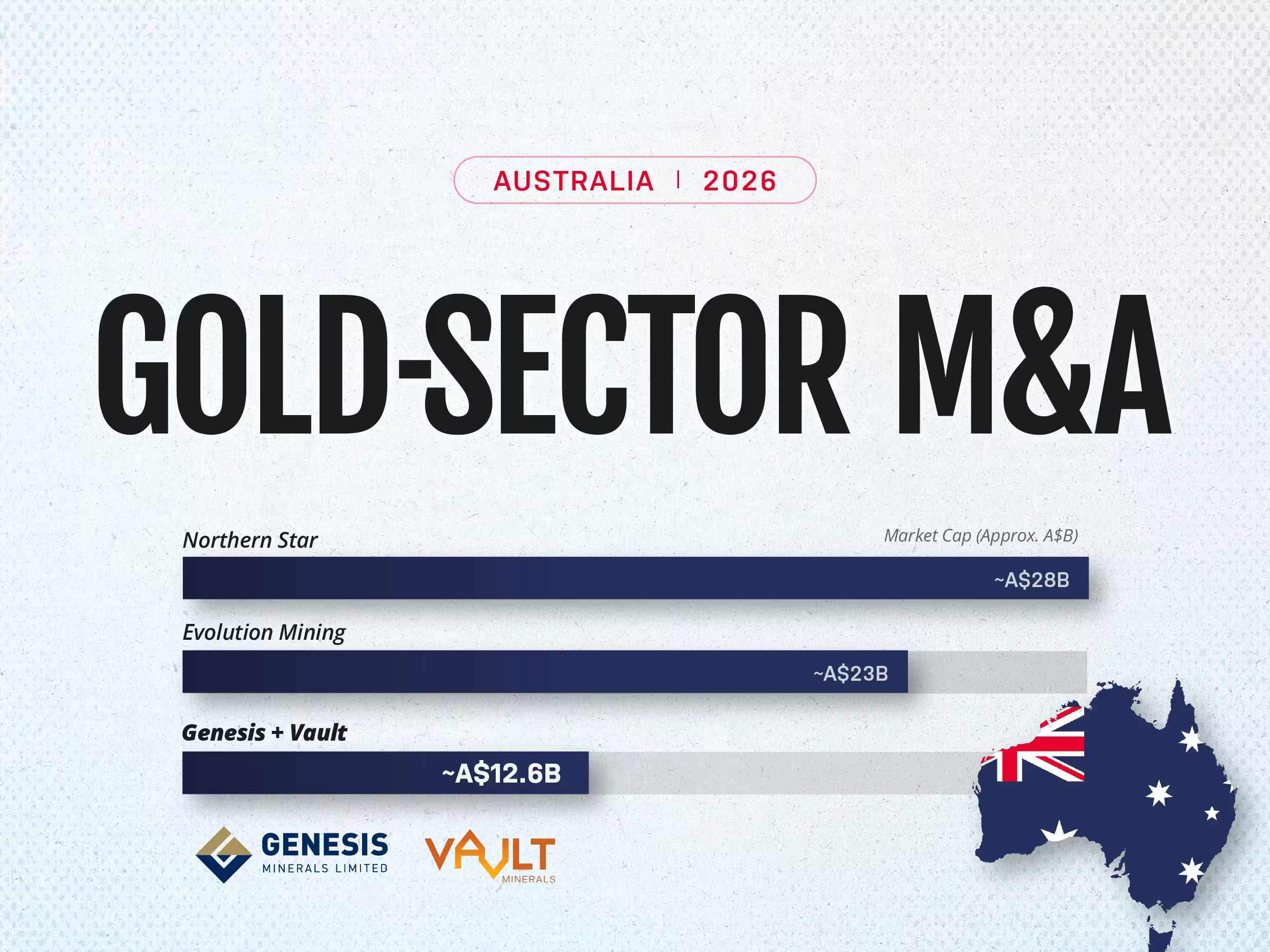
Gold hit an all-time high of about US$5,595 an ounce in January 2026 before settling near US$4,000, still far above the levels of a few years ago. That combination, record prices followed by a stable, still-profitable pullback, has done something a straight rally rarely does: it has opened a merger window.
.webp)
Three Ancient Belts Carry Ghana's Gold, and Investment Keeps Flowing to Them
Three Ancient Belts Carry Ghana's Gold, and Investment Keeps Flowing to Them
In March 2026, one of Ghana's own mining companies said it would invest about $1.2 billion in its operations at the Tarkwa and Damang gold mines. Both sit on the Ashanti belt, one of three narrow bands of ancient rock that carry almost all of Ghana's gold.