Precious Metals
December 29, 2025
3 min
Precious Metals
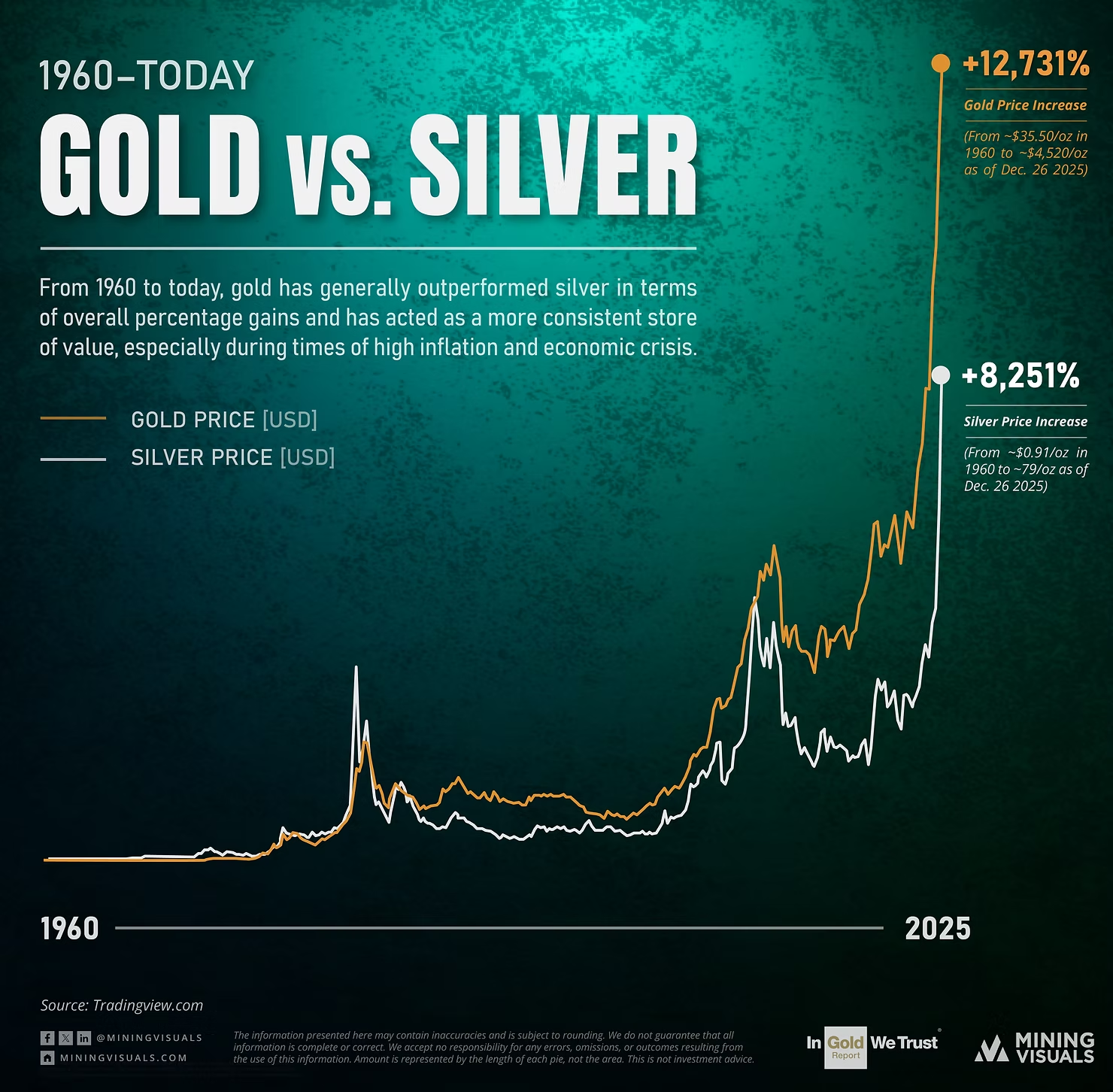

The chart above tracks 65 years of price history, but the most compelling story isn't just the long-term trend, it’s the explosive price action happening right now.
After decades of steady accumulation, the "Yellow Metal" has entered a new phase of price discovery, leaving historical resistance levels in the dust. Meanwhile, Silver is waking up, displaying its signature volatility as it attempts to close the gap.
1. Gold: The Breakout (Technical Strength)
Gold’s recent price action (the orange line) is defined by higher lows and shattered ceilings. Unlike previous cycles where gold would spike and retrace 30-40%, the recent trend shows aggressive buying on dips. The chart shows a "parabolic" move emerging in the 2020s, signaling that gold has transitioned from a passive hedge to a momentum trade. It is no longer just protecting wealth; it is aggressively repricing it.
2. Silver: The Slingshot Effect
For decades, Silver (the white line) was haunted by the "Double Top" of 1980 and 2011, where rallies failed at the $50 mark. The chart reveals that this era is over. Silver didn't just inch past its old highs, it vaulted over them. This confirms a massive structural shift: the market has finally absorbed the "byproduct supply" glut, and speculative money has returned to the silver market with force.
The Catalysts: What is Driving the Recent Vertical Move?
Why is the chart going vertical now? Three specific market drivers are fueling this latest leg up:
- The Geopolitical Premium: With conflicts escalating in Eastern Europe and the Middle East, the "Fear Trade" is back. Capital is fleeing risk assets and moving into physical metals, creating a price floor that didn't exist a decade ago.
- The Central Bank "Whales": This is the biggest change in the market. Since 2022, global central banks (led by China, Poland, and Singapore) have been buying gold at record paces. They are not price-sensitive; they are buying to diversify away from the dollar, creating immense sustained demand.
- The Rate Cut Narrative: As markets anticipate the end of the high-interest-rate cycle, speculators are front-running the Fed. Lower rates typically weaken the dollar, acting as rocket fuel for precious metals prices.
The Bottom Line
The chart shows a clear breakout. Gold has decoupled from traditional correlations and is carving a new path upward, driven by sovereign buying and geopolitical stress. Silver remains the wild card, lagging behind, but with the historical potential to outperform rapidly if the "catch-up" trade ignites.
Sources & Data
- 1960 Historical Prices: Historical spot price data for 1960 (Gold ~$35.50; Silver ~$0.91) via OnlyGold and MeasuringWorth.
- 2025 Market Data: Current spot prices (Gold ~$4,520; Silver ~$79) as of Dec 26, 2025, via TradingView.
- Silver Supply Dynamics: Data on silver byproduct supply (approx. 70-80% of global output) via The Silver Institute (World Silver Survey) and USGS Mineral Commodity Summaries.
- Industrial Demand: Silver industrial offtake statistics (~50%+ of demand) via The Silver Institute.
- Central Bank Buying: Sovereign gold purchase trends (2022–2025) via World Gold Council (Gold Demand Trends).
Disclaimer: This content is for informational purposes only and is not investment advice. Precious metals are volatile, and past performance does not guarantee future results.




Explore More
View All

The World's 20 Largest Primary Silver Mines by 2025 Output
The World's 20 Largest Primary Silver Mines by 2025 Output
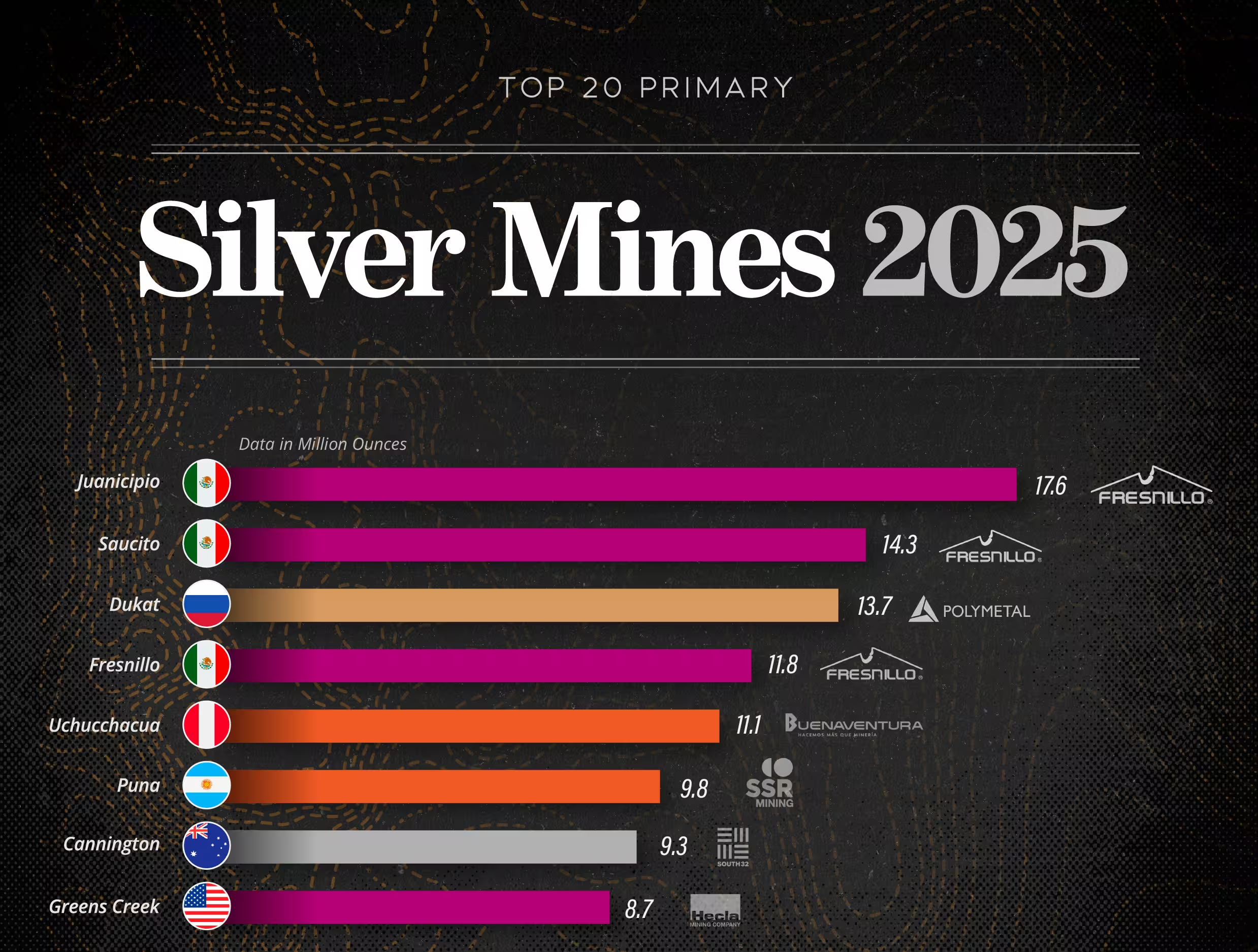
The single largest source of primary silver is a young mine in the Mexican state of Zacatecas. Juanicipio put out 17.6 million ounces in 2025, more than any other mine that earns its keep from silver itself rather than pulling it out as a byproduct of lead, zinc and gold. Fresnillo operates it and owns 56%; the other 44% changed hands in September 2025, when Pan American Silver completed a US$2.1 billion takeover of MAG Silver.
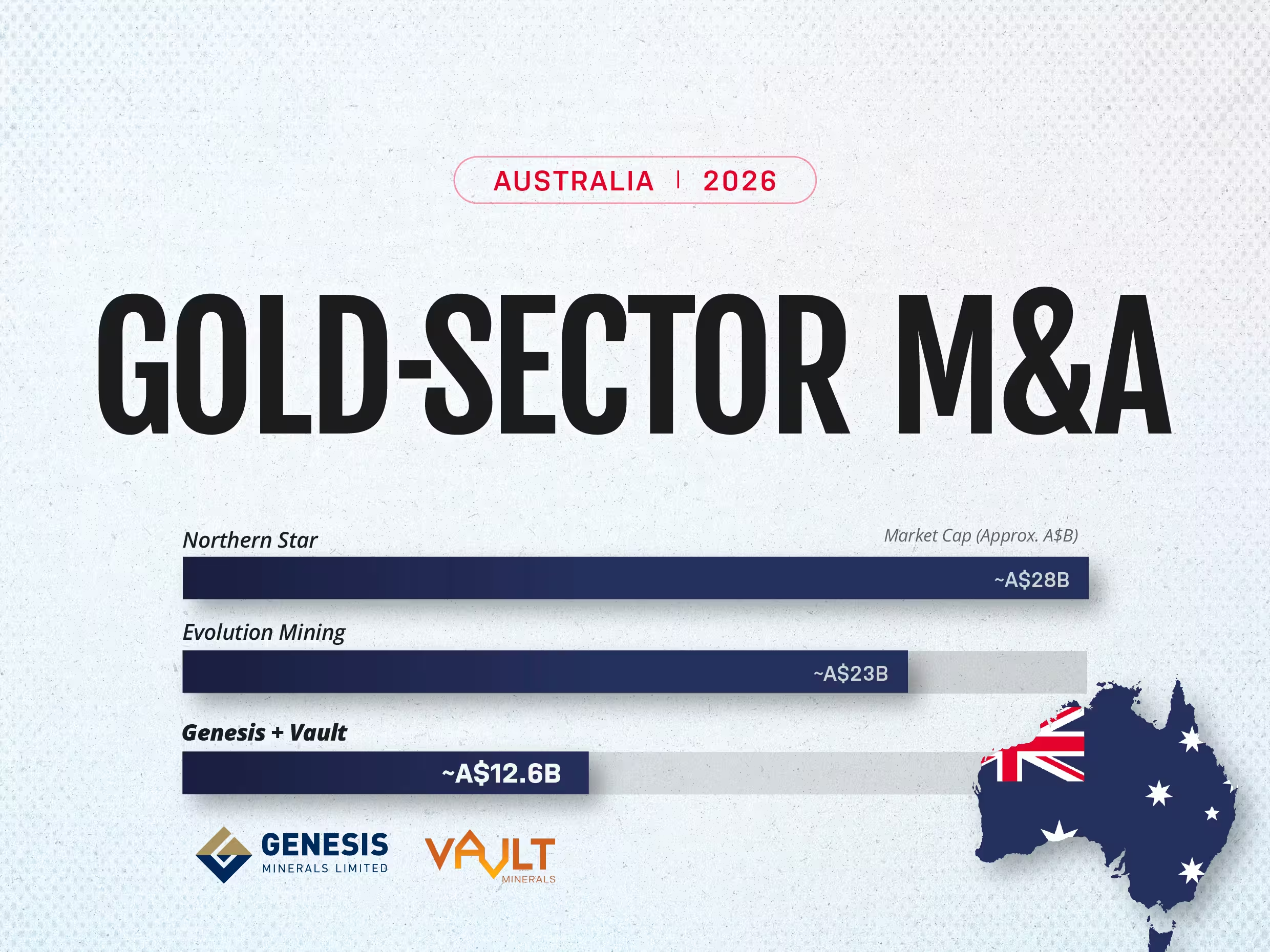
Gold's Record Run Has Set Off a Wave of Mining Mergers
Gold's Record Run Has Set Off a Wave of Mining Mergers
Gold hit an all-time high of about US$5,595 an ounce in January 2026 before settling near US$4,000, still far above the levels of a few years ago. That combination, record prices followed by a stable, still-profitable pullback, has done something a straight rally rarely does: it has opened a merger window.
.webp)
Three Ancient Belts Carry Ghana's Gold, and Investment Keeps Flowing to Them
Three Ancient Belts Carry Ghana's Gold, and Investment Keeps Flowing to Them
In March 2026, one of Ghana's own mining companies said it would invest about $1.2 billion in its operations at the Tarkwa and Damang gold mines. Both sit on the Ashanti belt, one of three narrow bands of ancient rock that carry almost all of Ghana's gold.
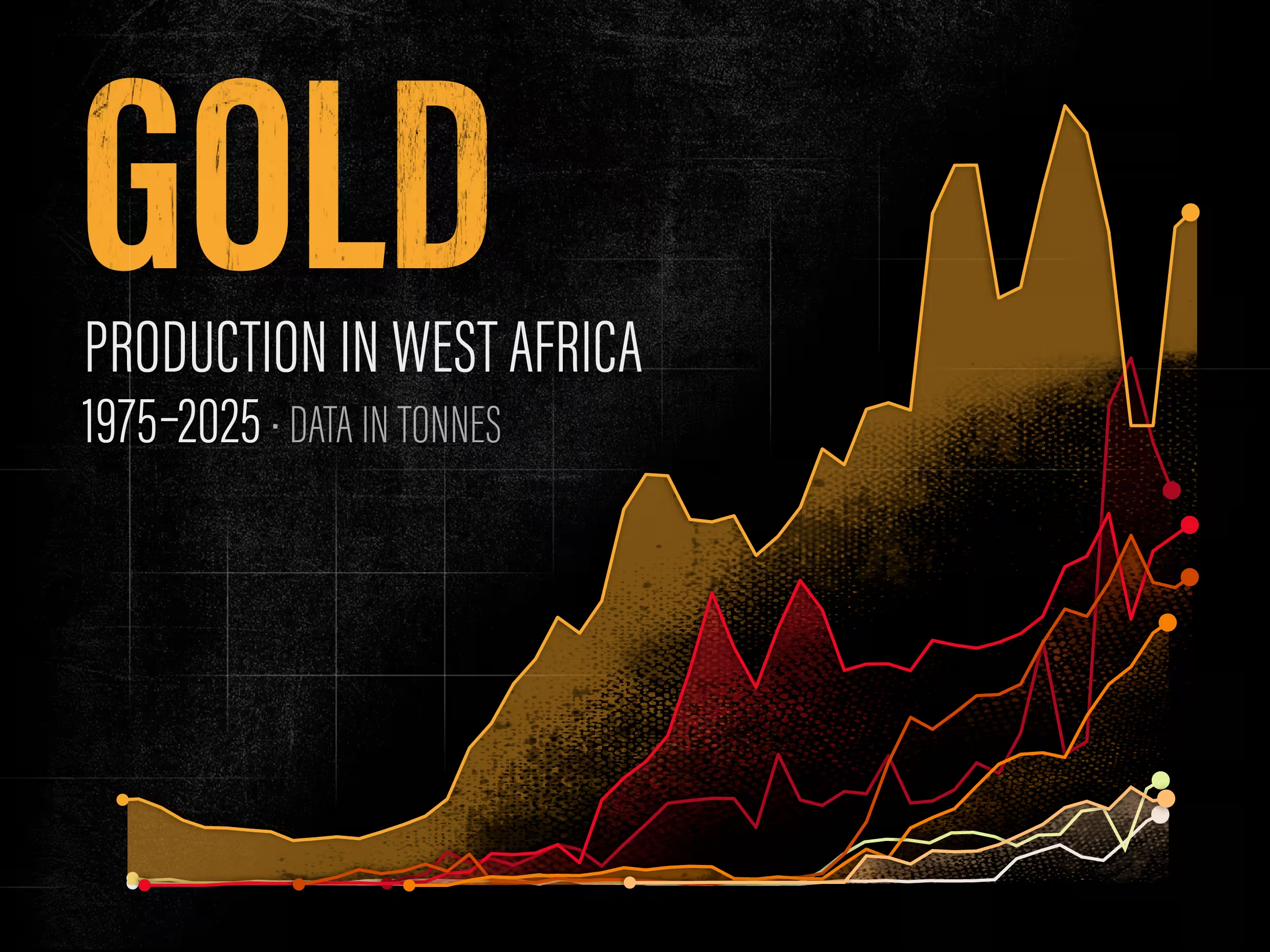
Charted: Fifty Years of Gold Production in West Africa
Charted: Fifty Years of Gold Production in West Africa
West Africa is in the middle of a gold run. In 2025 Ghana's output climbed more than 23 percent to a record 5.94 million ounces, holding its place as Africa's largest producer and now the sixth-largest in the world, and analysts expect the wider region to rebound about 8 percent in 2026.