Precious Metals
September 25, 2025
3 min
Precious Metals
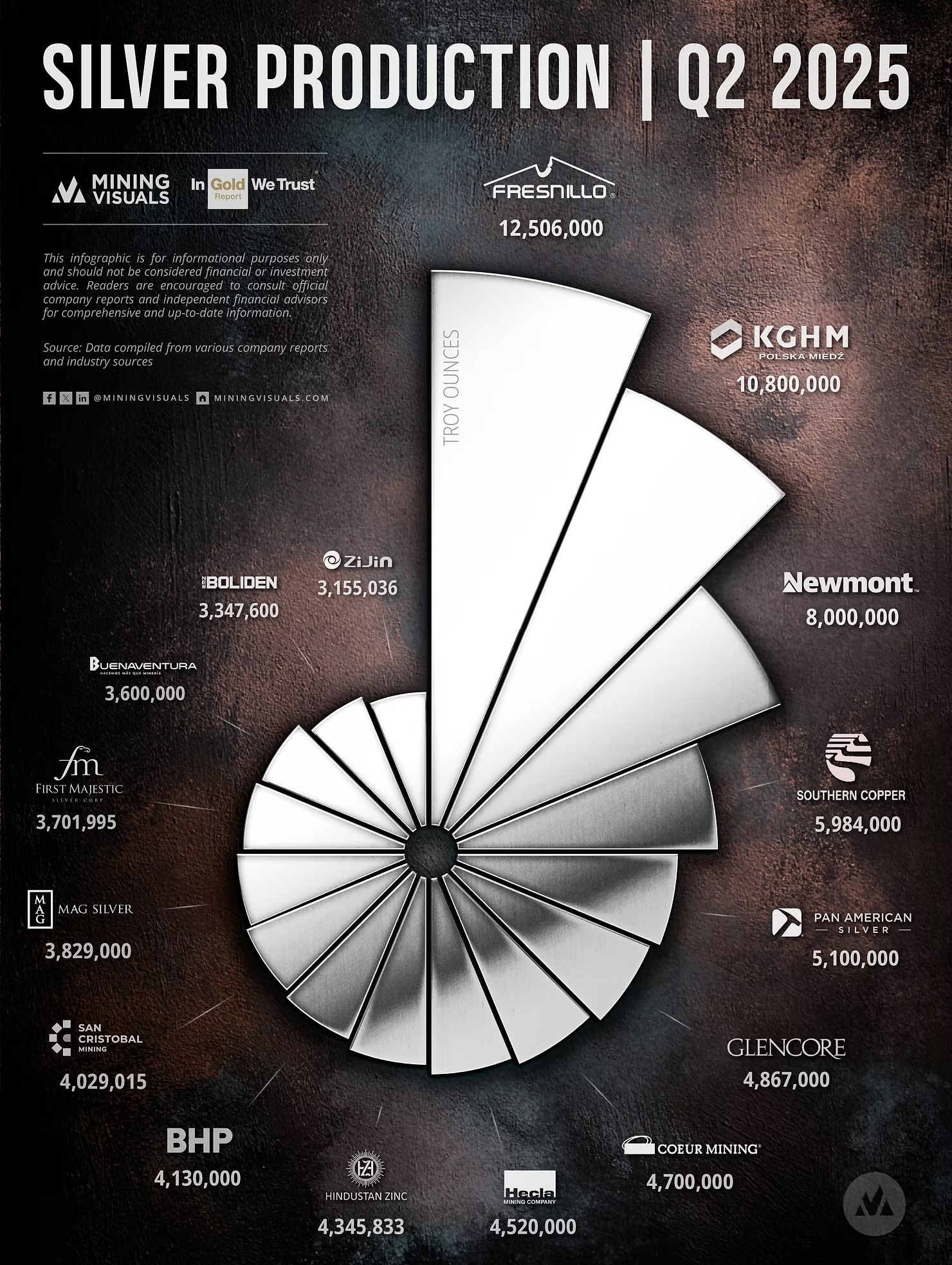

The silver market remained robust in Q2 2025, with strong prices benefiting the entire sector. However, company production results show a clear divide between miners successfully executing on their operational plans and those navigating challenges. The quarter's results were not driven by market sentiment, but by on-the-ground factors ranging from successful mine ramp-ups to planned maintenance and grade variability. This analysis compares Q2 2025 production results with those from the same quarter last year.
How the Top Producers Fared
- Fresnillo Plc (-14.66%): The world's top producer reported output of 12,506,000 ounces. The primary drivers were the planned cessation of mining at the San Julián Disseminated Ore Body and a significant labor strike at the Tizapa mine. Additionally, lower silver grades in the ore processed at the Fresnillo and Ciénega mines contributed to the reduced output, yielding less silver per tonne of material.
- KGHM Polska Miedz (-7.21%): As a primary copper producer, KGHM's silver output is a byproduct. The company's 7.21% drop to 10,800,000 ounces was primarily due to a planned maintenance shutdown at its Głogów II Copper Smelter and Refinery. Because silver is recovered as a by-product of copper processing, this temporary halt in operations directly reduced the total silver output.
- Newmont Corporation (Negligible Change): The gold giant's silver production remained nearly flat, registering a negligible change at approximately 8,000,000 ounces. This steady output was a direct result of planned mine sequencing at its Peñasquito mine in Mexico. While the company successfully processed ore with higher gold grades, a deliberate move to a different area of the pit meant the ore contained less silver compared to the previous year. This balanced performance underscores the company's long-term strategy for managing the complex, polymetallic deposit.
Growth Leaders: Ramping Up and Exceeding Plans
- Coeur Mining Inc. (+80.77%): Coeur posted the most dramatic growth, with production surging 80.77% to 4,700,000 ounces. This increase was largely driven by strong performance at its Rochester mine in Nevada. The increase reflects the successful ramp-up of the new Plan of Operations Amendment 11 (POA 11), leading to higher stacking and processing rates on the new Stage VI leach pad.
- First Majestic Silver Corp. (+75.94%): First Majestic's impressive 75.94% production increase to 3,701,995 ounces was primarily due to higher-grade ore from the Ermitaño mine feeding the Santa Elena mill. This, combined with improved recovery rates and increased throughput at the San Dimas mine following key operational upgrades, significantly boosted overall silver production.
Headwinds and Strategic Shifts
Conversely, the largest production decreases were the result of specific, planned operational events:
- MAG Silver Corp (-23.42%): The significant 23.42% drop in production to 3,829,000 ounces. The decline in silver production in the second quarter of 2025 was attributed to planned mine sequencing at the Juanicipio project. The change was due to the processing of ore with a lower average silver grade, an expected variation consistent with the operator's (Fresnillo) long-term mine plan.
- Zijin Mining (-17.36%): Zijin's 17.36% decrease was a result of a strategic decision at its Čukaru Peki mine in Serbia. The company intentionally processed lower-grade polymetallic ore during the quarter to prioritize a waste-stripping campaign that will provide better access to the high-grade copper-gold zones later in the year.
As producers head into the second half of 2025, their ability to deliver on mine plans and manage operational complexities will continue to be the primary driver of shareholder value.
Source: Data compiled from various company reports and industry sources
This content is for informational purposes only and should not be considered financial or investment advice. Readers are encouraged to consult official company reports and independent financial advisors for comprehensive and up-to-date information.





Explore More
View All

A Median New US Home Now Costs Less Than 100 Ounces of Gold
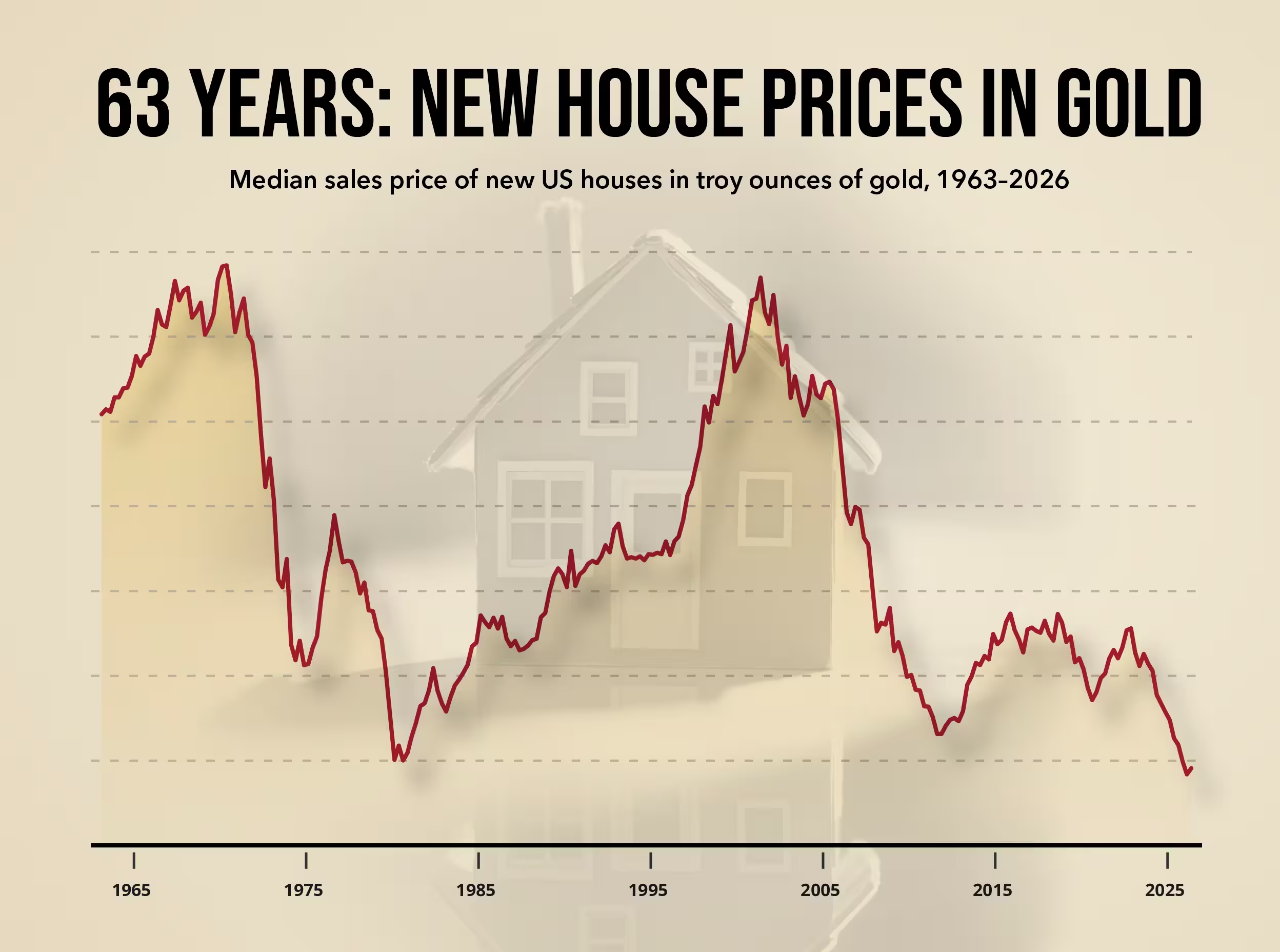
A Median New US Home Now Costs Less Than 100 Ounces of Gold
The US Census Bureau's July new-home report, released on August 25, put the median price of a newly built house at $393,800. HousingWire noted that was the lowest since July 2021. In dollars, the market has moved within a narrow band: the quarterly median has stayed between $408,500 and $435,400 since 2023.
Gold's Record Run Has Set Off a Wave of Mining Mergers
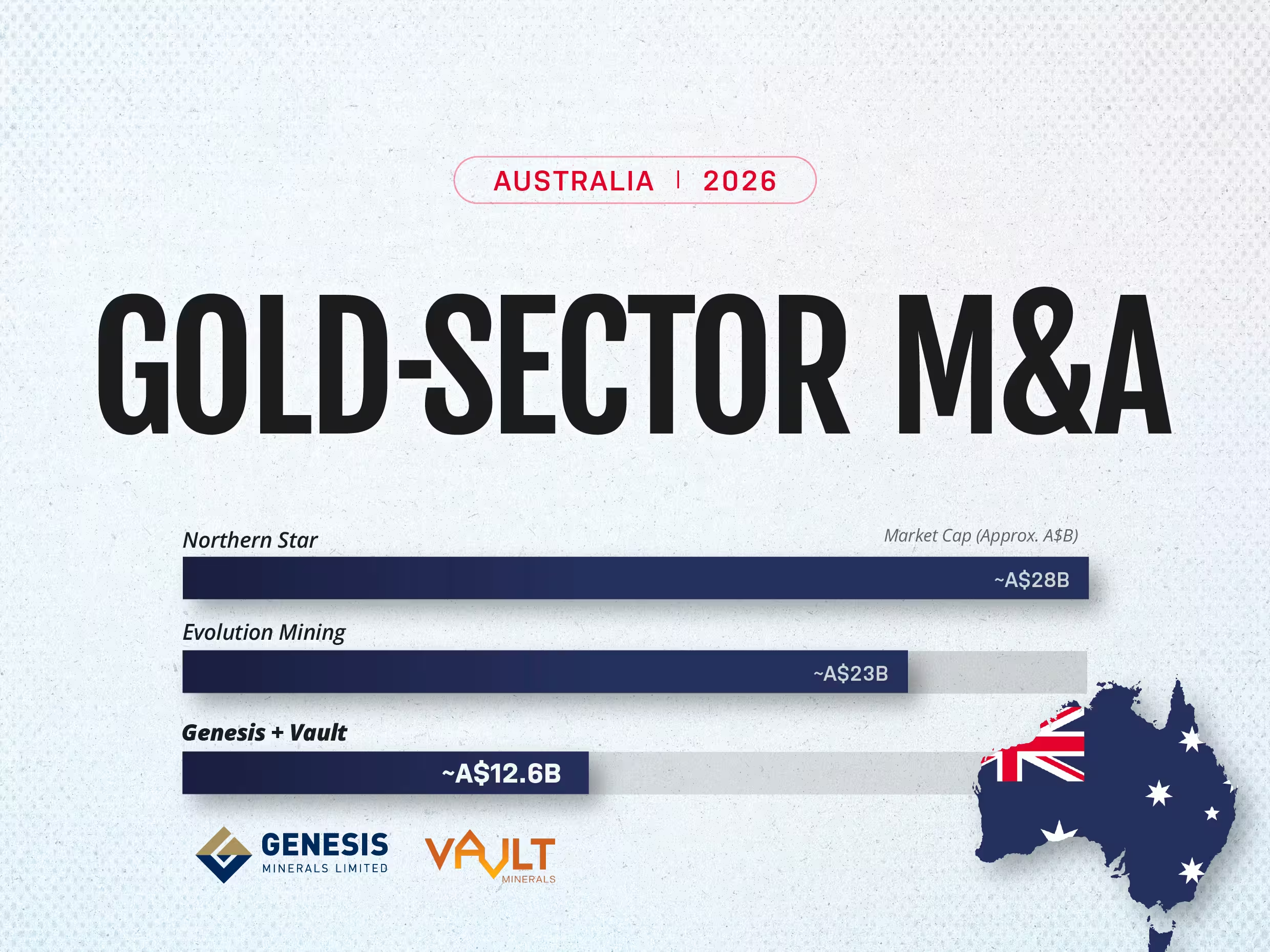
Gold's Record Run Has Set Off a Wave of Mining Mergers
Gold hit an all-time high of about US$5,595 an ounce in January 2026 before settling near US$4,000, still far above the levels of a few years ago. That combination, record prices followed by a stable, still-profitable pullback, has done something a straight rally rarely does: it has opened a merger window.
.webp)
Three Ancient Belts Carry Ghana's Gold, and Investment Keeps Flowing to Them
Three Ancient Belts Carry Ghana's Gold, and Investment Keeps Flowing to Them
In March 2026, one of Ghana's own mining companies said it would invest about $1.2 billion in its operations at the Tarkwa and Damang gold mines. Both sit on the Ashanti belt, one of three narrow bands of ancient rock that carry almost all of Ghana's gold.
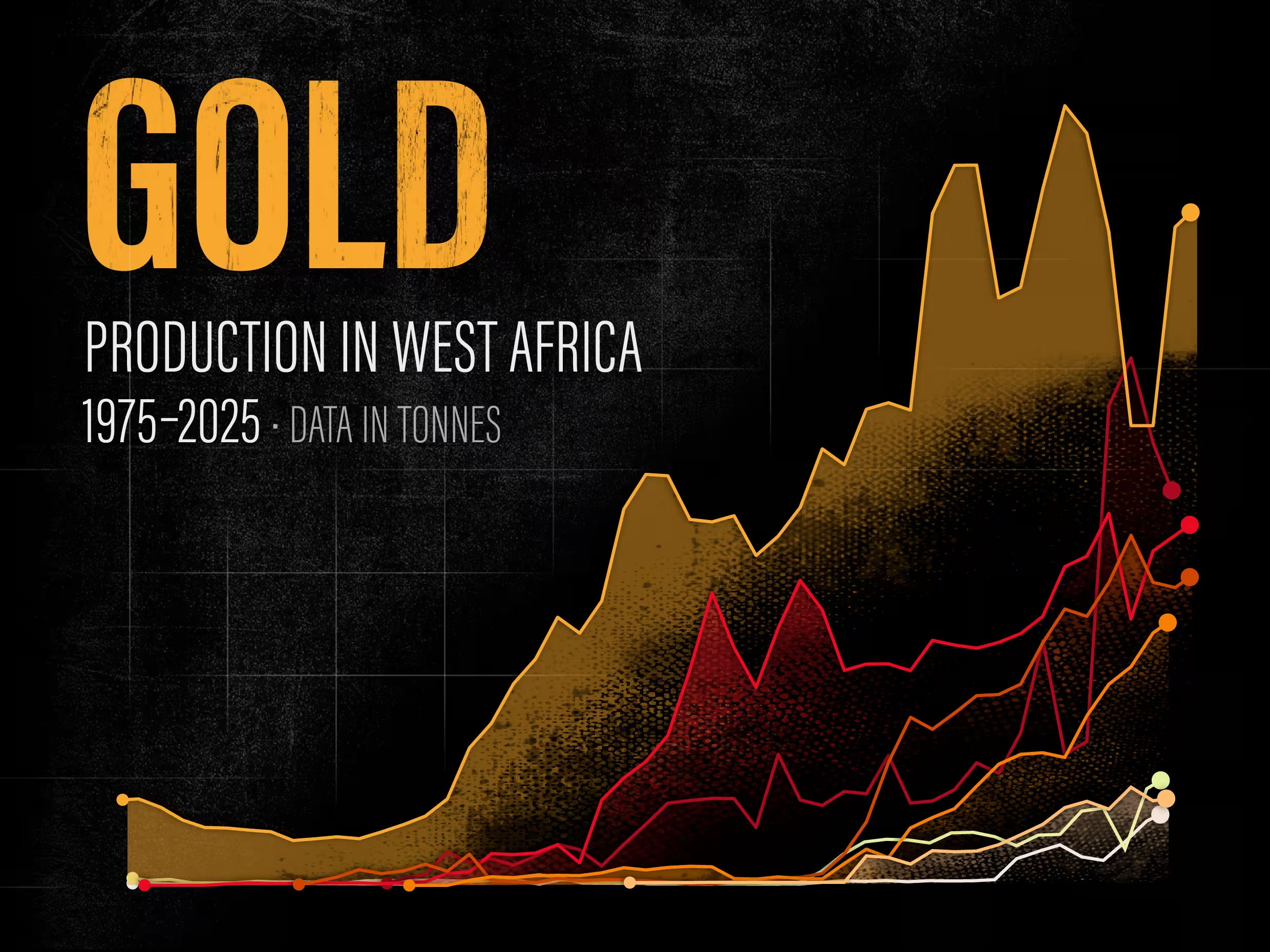
Charted: Fifty Years of Gold Production in West Africa
Charted: Fifty Years of Gold Production in West Africa
West Africa is in the middle of a gold run. In 2025 Ghana's output climbed more than 23 percent to a record 5.94 million ounces, holding its place as Africa's largest producer and now the sixth-largest in the world, and analysts expect the wider region to rebound about 8 percent in 2026.